Early Beginnings and the Journey of Growth
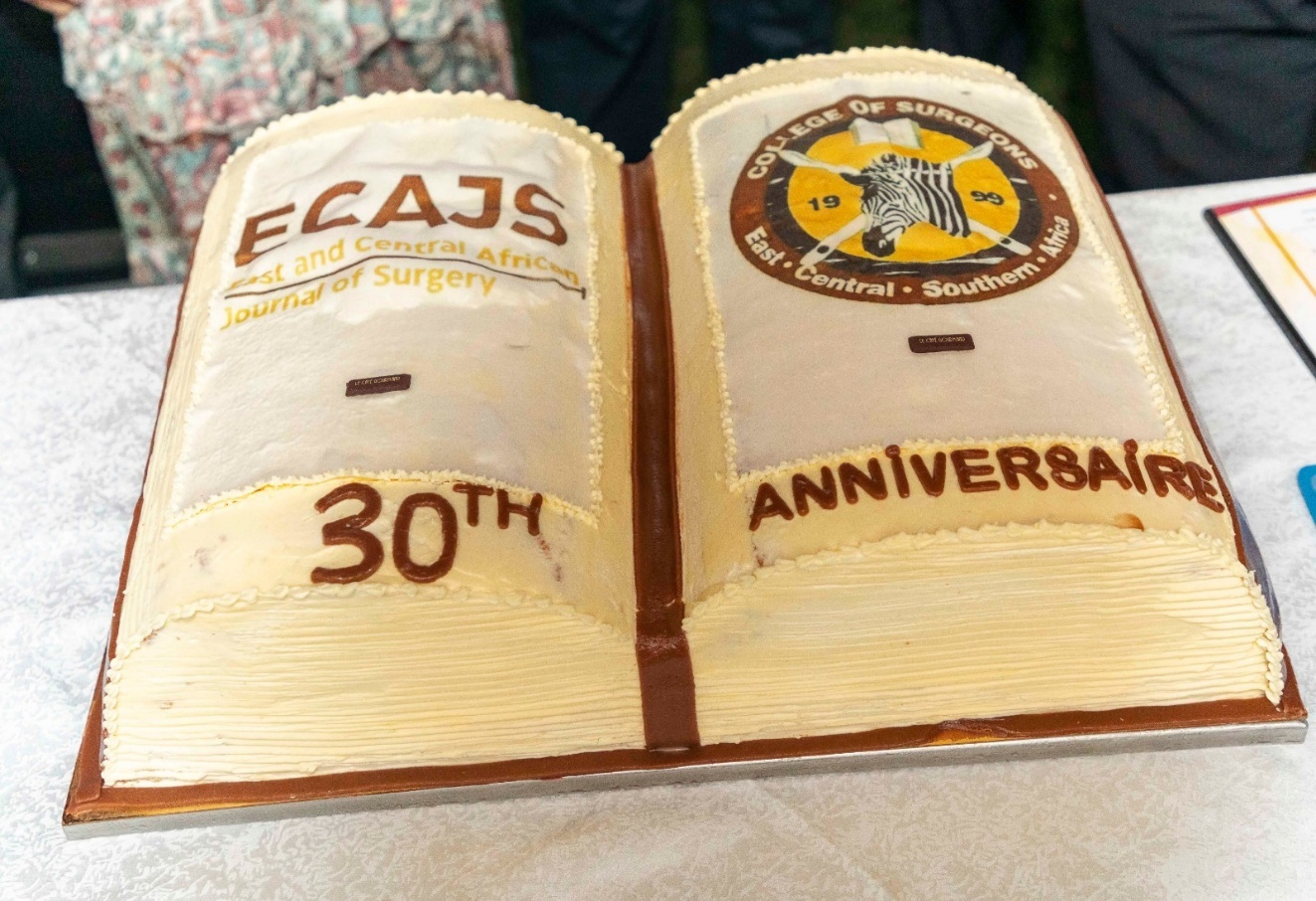
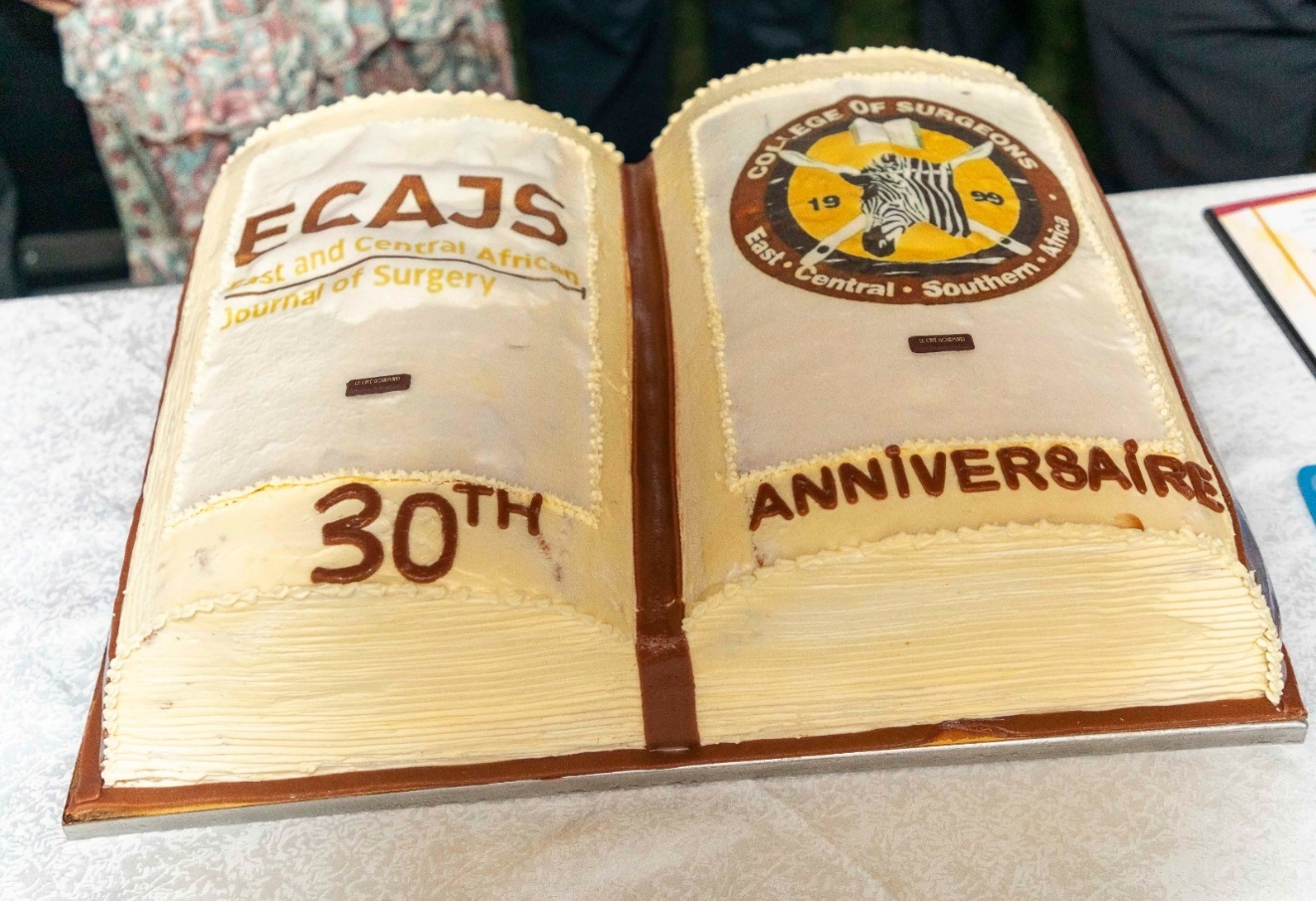
The advent of the East and Central African Journal of Surgery (ECAJS) can be traced as far back as Friday 10th March 1975. As proposed by Hon. Secretary, John Jelles who later became the first Editor-in-Chief, the idea was to publish and disseminate abstracts presented at the Association of Surgeons of East Africa (ASEA) meetings. The first volume of the Proceedings was therefore published in 1978 and in 1995, ECAJS was formally established, running a bi-annual publication frequency and later transitioned to a quarterly publication in 2020.1 The journal adopted a peer-review model and opened submissions to include non-members of ASEA. Currently, ECAJS releases four issues each year with diverse representation of authors from across Africa and beyond.2 In 2025, ECAJS attained a remarkable milestone, the Pearl Anniversary, celebrating 30 years of surgical scholarship and evidence dissemination of surgical knowledge through a diamond open access surgical publishing model (Figure 1). Since its inception, ECAJS has established itself as a beacon of academic surgical excellence and a space for professional growth and showcase of scientific innovations among urgical care providers and researchers across Africa and beyond. From its humble beginnings as a regional publication of ASEA proceedings, for sharing surgical experiences and innovations, ECAJS has grown into the reference trusted scientific platform for surgical knowledge in Africa. It has promoted evidence-based practice and nurturing research capacity in a region with over 90% of surgical burden but often underrepresented in global literature.3 ECAJS journey has been one of resilience, vision, and shared commitment to improving surgical care and outcomes for the people of Africa.
ECAJS Thought, Peer Review and Strategic Leadership: Standing on the Shoulders of Giants
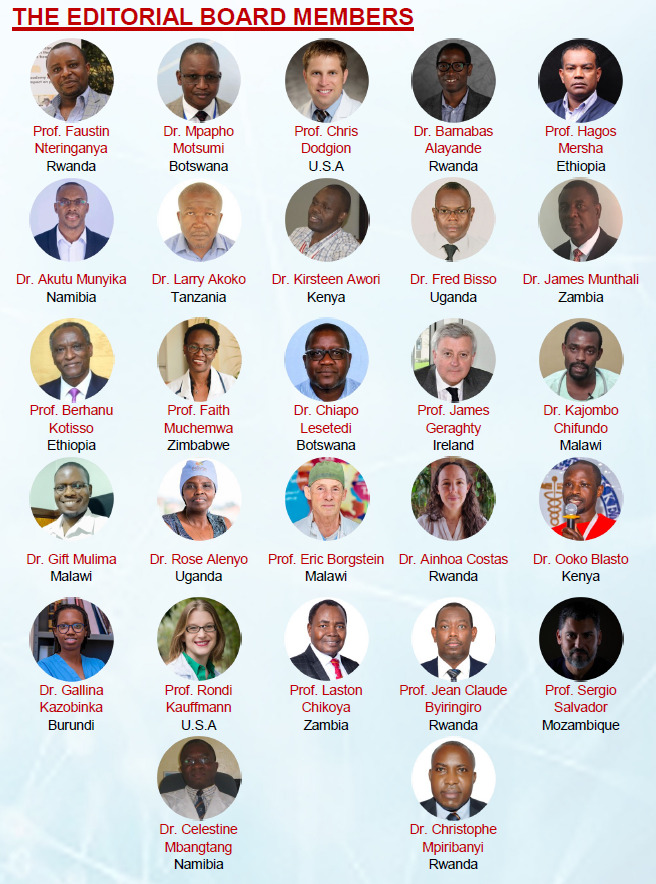
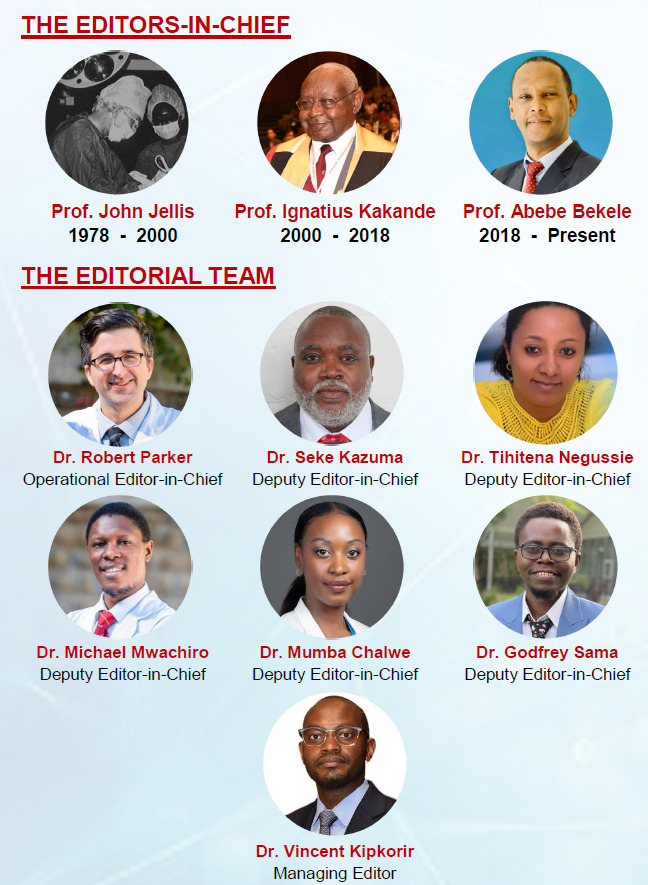
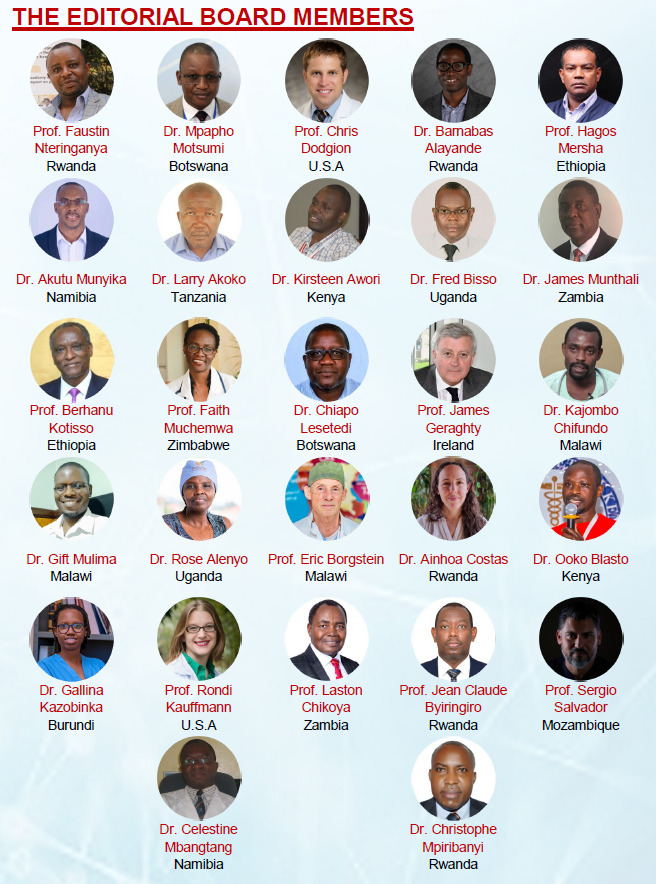
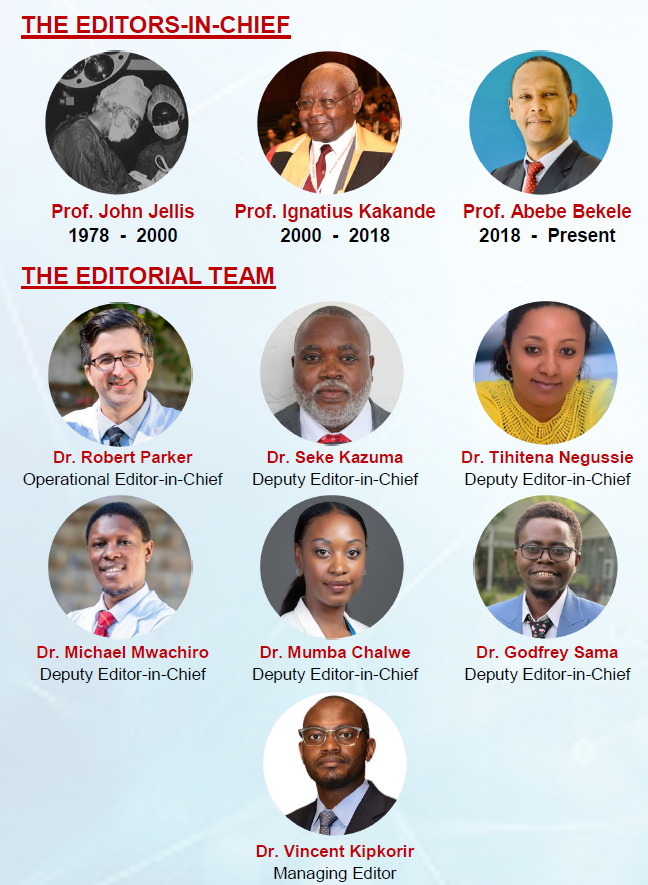
As with the scholarly nature of the journal, the leadership has equally grown over the years. The journal has immensely benefited from the strategic and thought leadership of 3 Editors-in-Chief from the inaugural Prof. John Jelles to the late Prof Ignatius Kakande, who was also one of the founding members of COSECSA.4 The journal is currently under the leadership of Prof. Abebe Bekele who since 2018 has lead the journal through a period of significant growth wading through a sea of challenges in the ever-evolving peer review and publishing world.5 Another notable landmark in the journal leadership is the constitution of an editorial board in 2019 which was subsequently revised in 2024 to enhance geographical, specialty and regional and global diversity (Figure 2). The editorial board serves on a day-to-day basis providing oversight to the running of the journal and ensuring all submitted manuscripts undergo rigorous peer review while maintaining the journal’s international publishing standards. As with the editorial board, the editorial team, an internal team closely supporting the Editor-In-Chief, has equally evolved. Initially the established team was composed of 3 deputy Editors In Chief and was further revised in 2024, as the number of submissions grew, to have a total of 7 Deputy Editors-In-Chief and a Managing Editor. To ensure sustainable leadership and in efforts to mentor the next generation of Surgical Editors-in-Chief, the Senior Editor-in-Chief appoints on a rotational basis from among the editorial team members, an operational editor-in-chief who closely monitors the routine running of the journal, supporting the senior EIC in leading the editorial team and providing decision recommendations to the senior EIC on journal matters (Figure 3).
Evolution of Authorship Diversity, Readership and Engagement Over the Past 3 Decades
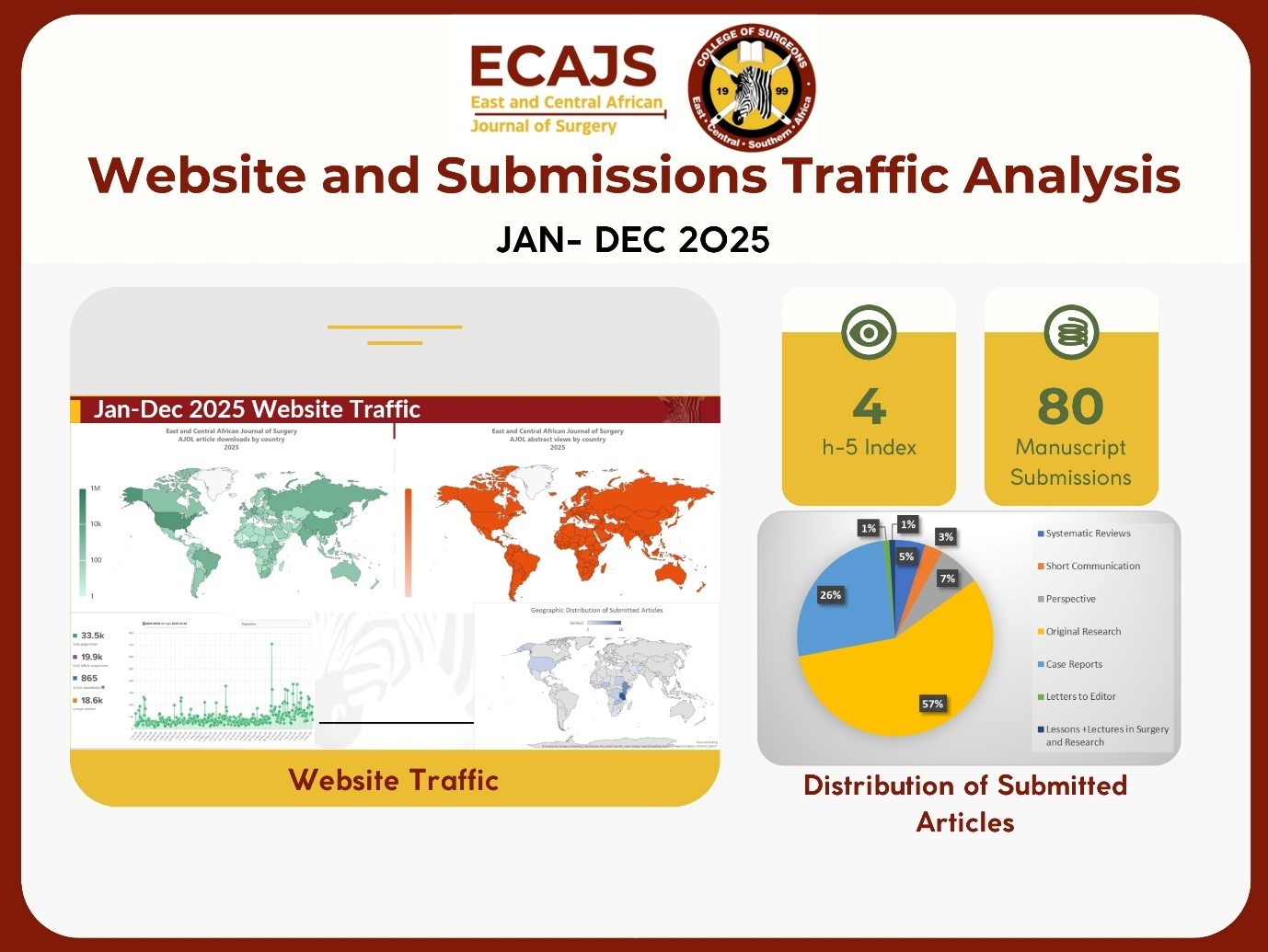
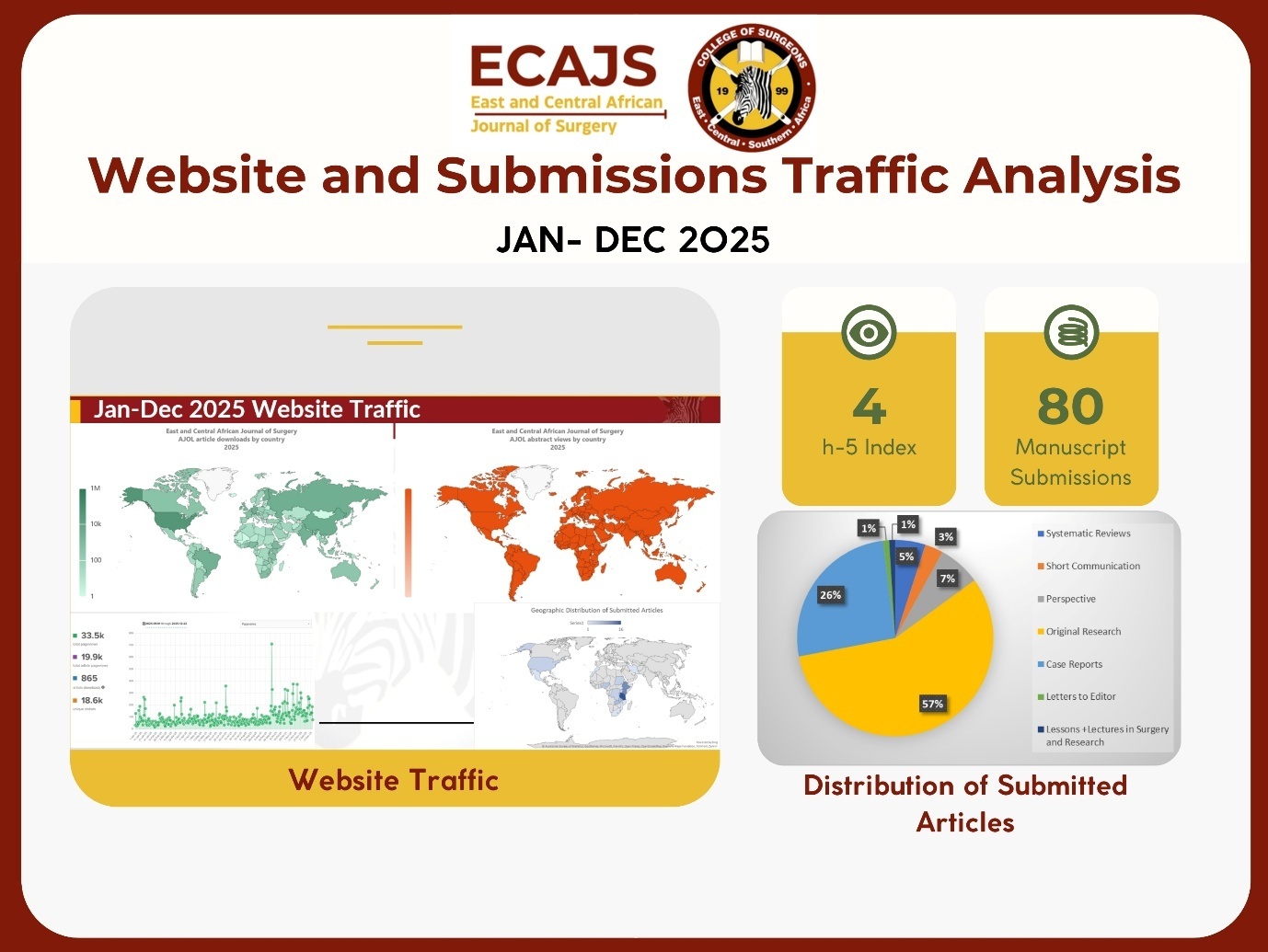
Recognizing the underrepresentation along geographical and gender lines that has historically been observed in the surgical field, the ECAJS set out to create a platform and avenue that allows for equitable opportunities for the dissemination and consumption of surgical knowledge irrespective of level of seniority, gender, geographical origin and career stage notably enhancing the involvement of early career researchers, women in surgery and trainees in the surgical publishing arena. In an abstract presented at the 10th International Congress on Peer Review and Scientific Publication, Chicago, USA, female representation along the lines of first, corresponding, and last author increased steadily over the years with a corresponding increase in the gender disparity ratio.6 This finding echoes out the significant role the journal has played in enhancing diversity in surgical publishing in Africa. As with the authorship diversity, the readership and visibility of papers published in the journal has also continued to grow with over 30,000 page views in 2025 and readership across all continents. The number of manuscripts submitted has also continued to grow with 2025 recording a total of 80 new submissions, as at the time of drafting of this editorial. The origin of authors is sparsely distributed within the African region with select submissions from outside the continent, largely composed of original research article submissions (Figure 4). As you may note with the spread of readership, the ECAJS in this case serves to increase the visibility and reach of African-borne surgical data beyond the confines of the continent and in so doing increases the representation of African surgical data in formulation of surgical standards and practice guidelines.7 In the era of artificial intelligence-based data processing, this enhanced visibility bodes well with goals to bias AI towards the African context, a key missing piece in the era of AI-influenced decision making.8 The journal has also reported a h-index of 4 in 2024 and 2025, a metric measuring a productivity and citation impact, and targets to grow this over the next years as it works towards PubMed indexing.9
Evolving with the Time: Necessary Adjustments To Keep Up With the Publishing Landscape
The publishing landscape has in recent years been in a perpetual state of growth, evolving with each day. Among the key points of change has been sustaining open access publishing, funding models for diamond open access models and keeping up with AI and technological advancements. The ECAJS has been very intentional to ensure that the access to a publishing platform and access to surgical knowledge is without any barriers yet at the same time maintaining quality standards and author experience benchmarked from international surgical journals. An excellent example of this is in the procurement of a state-of-the-art peer review and manuscript submission system that significantly enhance the peer review workflow for authors, reviewers, editors, copy editors and typesetters through automations, AI-enhanced prompts, system reminders, guiding templates among other features. For readers, the ECAJS presents a very intuitive publishing platform that allows readers to interact with published content, have a feel of the authors, easily access their relevant background, and track the visibility metrics of published content. The quality and accuracy of published content has also continuously improved with the incorporation of professional typesetting and copy-editing services into the journal’s workflow. With reference to enhancing visibility metrics, the journal has continued to provide support to authors in generating visual abstracts that are used to disseminate and spotlight published articles across different social media platforms.
In order to keep up with the ever-growing ethical dilemmas, the ECAJS has over the years revised its editorial and publishing policies to govern the use of AI in the writing and reviewing of manuscripts, authorship wrangles, among other issues emphasized by the Committee on Publication Ethics (COPE). This has also been implemented together with the acquisition of relevant infrastructure to detect the unethical use of AI, data falsification and fabrication as well as unacceptable levels of plagiarism. With the constant awareness that growth calls for multifaceted equitable collaborations, the ECAJS has partnered with several African and International journals to facilitate capacity building for editors, reviewers and authors alike and to improve the quality standards of the journal. One of the significant outputs of such collaborations in 2025 has been in the delivery of a 3-month long author training workshop that targeted researchers and trainees across all levels to enlighten and capacitate them in the principles of research, publication and grant writing. The training met the need of over 1000 scholars with the workshop content hosted on the journal’s You-Tube account to enable on-demand access beyond the workshop period.
Through these efforts ECAJS has provided the scholarly foundation to ensure that African surgical challenges, innovations, and successes are documented, disseminated, and celebrated within and beyond the continent while at the same time not compromising on quality and ethical standards. The journal has in the same breadth chronicled the evolution of regional health systems, the response to emerging surgical needs, and the continuous adaptation of surgical practice to local contexts in the age of AI, robotic surgery among other digital innovations in surgery.
The Diamond Anniversary: Looking Forward 30 Years Ahead
Over the past 3 decades, the ECAJS’ pages have captured not only advances in surgical practice but also the spirit of collaboration that defines our regional community. Contributions from surgeons, residents, and researchers across diverse settings, from rural district hospitals to national referral centers, have enriched our understanding of both common and complex surgical conditions. Through this shared learning, ECAJS has fostered a culture of inquiry, mentorship, and professional development. Many of today’s surgical educators and leaders had their first publications in this journal, a testament to its enduring role in nurturing young researchers and amplifying African voices in the global academic arena. As we reflect on the growth, we also pause to acknowledge the pioneers and visionaries who laid the journal’s foundation. The founding editors including Prof. John Jellis,10 Prof. Igantius Kakande,11 and the reviewers, authors and the readership who believed in the power of regional surgical scholarship, often working under resource-limited circumstances, built a platform that has stood the test of time. Their dedication, integrity, and belief in the importance of documenting African surgical experiences have illuminated the path for successive generations. Their legacy endures not only in the printed volumes and digital archives of ECAJS but also in the strengthened networks and professional bonds that the journal continues to inspire.
The ECAJS, in its Pearl anniversary celebrations, recognizes the immense in-kind contribution made by different stakeholders including the editorial board, editorial team and the pool of reviewers who give their expertise to ensure the journal remains a disseminator of quality knowledge. To paint a picture of this, each manuscript submitted to the journal is reviewed by a minimum of two reviewers, totaling about 80 reviewers annually after accounting for overlap. The reviewers spend a total of approximately 2,000 hours per year, equating to around $63,872 per year as in-kind contribution. In addition to reviewers, the journal benefits from editorial support drawn from a team of 38 editors serving as either editorial team or board members, who make their contribution to the running of the journal by processing manuscripts and making administrative decisions for the journal, cumulatively spending about 1,750 hours per year towards editorial tasks. Their estimated in-kind contribution amounts to $68,190 per year. It is through the continuous support and dedication of such individuals that the journal has been able to stay afloat and maintain consistent publishing over the past 3 decades and the infinity of years to come.
Without financial backing from COSECSA, the journal would equally be unable to maintain the day-to-day running costs including infrastructure, journal technical staff and outsourced services. COSECSA hereby invests an average of 56,000 USD every year in the ECAJS, allowing it to provide a no-fee-open-access surgical publishing platform and in so doing eliminate financial barriers to the dissemination of and access to surgical knowledge in the region. As submissions continue to grow, the financial burden to maintain a no-fee-diamond-open-access publishing exponentially increases to which end we welcome all interested parties and stakeholders to partner with us by contributing to sustain the journal’s efforts to spotlight African surgical data and support early career researchers.
The future of ECAJS is equally promising. As we enter a new era of digital publishing, open science, and global collaboration, the journal remains committed to amplifying African research and fostering equity in surgical knowledge dissemination. We are embracing innovations in online access, peer review, and capacity building, ensuring that both early-career and established surgeons find in ECAJS a reliable and respected home for their scientific contributions. Expanding international partnerships and promoting interdisciplinary collaboration will be key to advancing surgical science and practice in the next three decades.
In the spirit of the Pearl, a symbol of wisdom gained through time and perseverance, this anniversary reminds us that each publication, each peer review, and each mentorship exchange has contributed to the luster of a collective achievement. Together, we have built more than a journal; we have built a community of practice dedicated to excellence, collaboration, and service to humanity.
We in entirety extend heartfelt gratitude to our readers, contributors, reviewers, and editorial team and board members, past and present, whose commitment has sustained ECAJS for three decades. Your engagement, expertise, and passion have made this journal a cornerstone of surgical dissemination in the region and we covet your continued support in the next three decades to come. As we look ahead to the next chapter, we reaffirm our mission: to advance surgical science, strengthen regional networks, and inspire future generations of African surgeons to lead through knowledge, compassion, and innovation.
Happy 30th Anniversary to The East and Central Journal of Surgery! May the next 30 years shine even brighter.