Introduction
Sigmoid volvulus (SV) is a condition in which the sigmoid colon twists around its mesentery, producing a closed-loop obstruction.1 Although the exact cause is unclear, predisposing factors include a long sigmoid colon with a narrow mesenteric base, chronic constipation, high-fiber diet, megacolon, and the use of anticholinergic, sedative, or anti-Parkinsonian drugs.2
The condition has been recognized since ancient times and varies geographically, being common in Africa, South America, Russia, Asia, and parts of Europe. Globally, SV is the third leading cause of large bowel obstruction after cancer and diverticular disease, accounting for 2–4% of intestinal obstructions.3 At University Teaching Hospital, it is a frequent cause of acute intestinal obstruction. Diagnosis is based on clinical and radiological findings, with characteristic signs on abdominal X-ray such as the omega or coffee-bean sign.4
Patients typically present after 1–4 days of abdominal pain, distension, and constipation—the classical triad of acute SV. Other symptoms may include vomiting, nausea, and rectal bleeding. Elderly patients on psychotropic drugs may have minimal pain despite marked distension.5
When untreated, SV can progress to bowel gangrene, perforation, peritonitis, and sepsis. The incidence of gangrenous SV ranges from 10% to 45%, with higher rates in low-resource settings due to delayed presentation.4 Data specifically addressing gangrenous sigmoid volvulus in low-resource settings remain limited and inconsistent, with variability in reported outcomes and management approaches gangrene significantly increases morbidity and mortality, making surgery mandatory.
Management aims to prevent recurrence through sigmoid resection. In non-gangrenous cases, decompression by sigmoidoscopy with rectal tube placement may relieve obstruction, but recurrence rates are high (up to 70%) unless followed by resection.6 In gangrenous cases, non-operative measures are contraindicated. Surgical options include:
-
Hartmann’s procedure: Resection of gangrenous bowel with end colostomy and rectal stump closure, preferred in unstable patients or those with gross contamination.
-
Primary resection and anastomosis (PRA): Resection with immediate colorectal anastomosis, with or without diversion, suitable for stable patients.7
In high-resource settings, PRA is common and safe in selected patients. In low-resource settings, including sub-Saharan Africa, Hartmann’s procedure remains frequent due to late presentation and limited perioperative support. However, growing evidence supports PRA in stable patients, as it reduces hospital stay and avoids the burden of stoma reversal.4,8 If PRA can be performed safely in selected patients with gangrenous SV, it has the potential to substantially reduce patient morbidity and overall health care costs. A study done in Kenya further supports the feasibility and safety of this approach in carefully selected cases.9
At the University Teaching Hospitals, Lusaka management commonly involves either PRA or Hartmann’s procedure, depending on the surgical team’s preference. Patients with colostomies often face stoma-related complications and financial challenges. Although sigmoid volvulus is the most common cause of intestinal obstruction at UTH, there is currently no published data specifically evaluating outcomes of surgical management of gangrenous SV at the University Teaching Hospitals, Lusaka.10
This study therefore aims to determine and compare the clinical outcomes of PRA versus Hartmann’s procedure in gangrenous SV at the University Teaching Hospitals, Lusaka.
Methods
We conducted an institution based prospective cohort study between May 2024 and April 2025 at the University Teaching, Adult Hospital, in Lusaka, Zambia. This hospital is the highest tertiary referral center catering to patients from all 10 provinces of Zambia. The study included patients aged 18 to 65 years.
We included patients who had presented with gangrenous sigmoid colon volvulus, identified by the surgical team as nutritionally and anaesthetically fit to undergo the operation and whose consent was obtained. The study excluded patients who were taken to ICU after theater and patients with compound volvulus. Convenient sampling technique was used in this study. The sample size of 40 was calculated using Kelsey-Fleiss formula. This study specifically included only patients diagnosed with gangrenous SV during the defined study period. Non-gangrenous SV cases were excluded by design, and therefore the total number of SV cases managed at the institution during this period could not be determined from this dataset.
Once the eligibility criteria were met and the decision was made to enroll the patient in the study, a structured data collection tool was used to obtain information on participants’ sociodemographic factors such as age, gender, height, weight, address, body mass index (BMI), ASA score, and education level. The other factors collected on the data collection tool were medical, laboratory factors, and intra operative data such as hemoglobin concentration, white cell count, type of surgery, viability of the bowel, and surgeon. A clinical data collection sheet was used to obtain and record the history and examination findings. The data collected using this sheet was standardized in a clinically and statistically readable format. The patients were followed up from the duration of admission up to the minimum of 30 days post operation.
The surgical technique used was per surgeon’s preference as per case standard procedure. There was no interference with decision. The progress of all patients was monitored closely in relation to success of surgery, length of hospitalization, and complications.
To ensure an objective assessment of complications following surgery, each patient was evaluated according to the CDC of Surgical Complication.11 The classification score classifies complications according to the necessary treatment. There are seven grades (I, II, IIIa, IIIb, IVa, IVb, and V), starting with grade I, any deviation from the normal postoperative course without the need for pharmacological treatment or surgical, endoscopic and radiological interventions and ending with grade V, “death of a patient.” In this sense, mortality, tied to surgical intervention, is classified as the most severe complication of all.
The collected data was entered on a spread sheet, checked for completeness, and was analyzed using the R statistical tool. For descriptive statistics, frequency and percentage was used for the qualitative variables and mean and standard deviation values for the quantitative variables. Also, a chi-square and Fisher’s exact test were used for the association between the qualitative variables.
Bivariate analysis with cross tabulations between type of SV management and other predicting factors was done to determine the relationship. Univariate and multivariate logistic regression was done to determine factors associated with SV management and control for confounding using backward conditional logistic regression; odds ratios, P values and the 95% confidence intervals were computed. Statistical significance was set at P value less than 0.05 (5%).
The study adhered to principles of benevolence, doing no harm, voluntary participation with informed consent, anonymity of clients, confidentiality of all information collected, and ownership of information. Approval for the study was obtained from the University of Zambia Biomedical Research Ethics Committee (UNZA-5590-2024) and National Health Research Authority (NHRAR-R-1671/10/06/2024). Permission to conduct a study was also obtained from the management of UTH, Adult Hospital. All information collected from study participants was kept confidential, and no names were used in this study for any reason other than during the follow-up; otherwise, study participant numbers were used instead.
Results
Patient characteristics
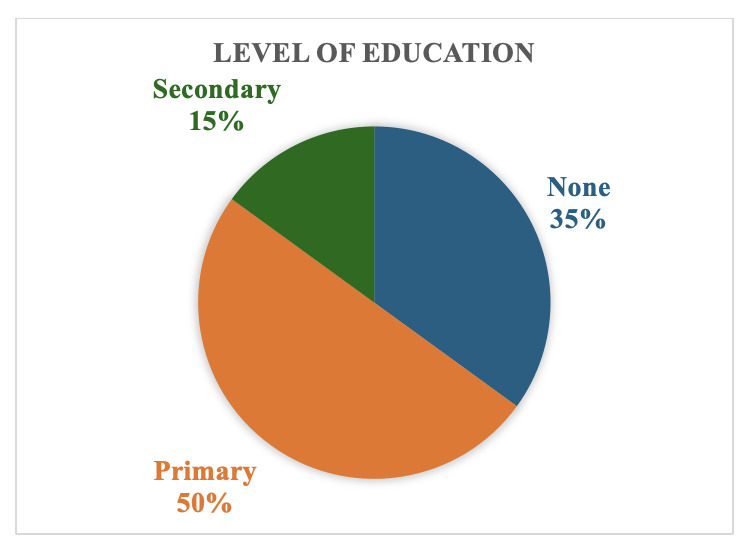
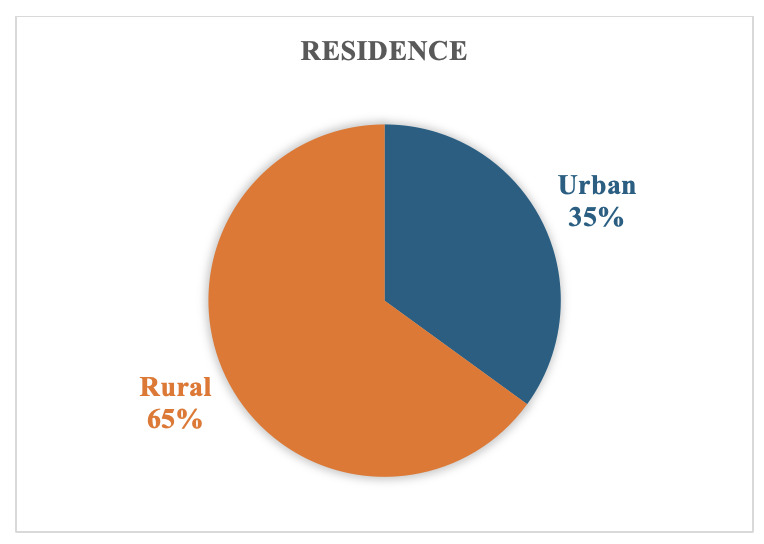
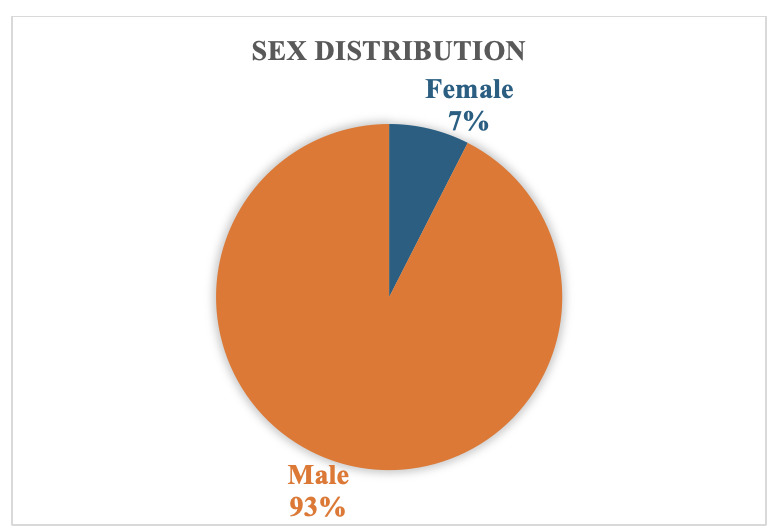
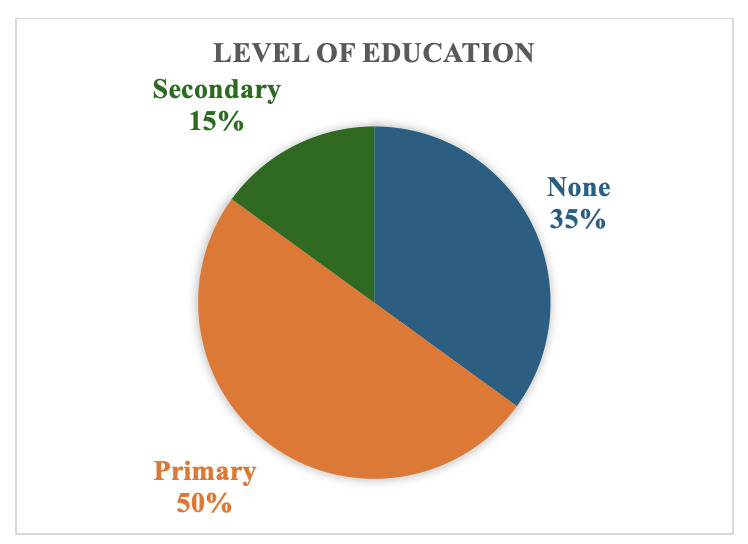
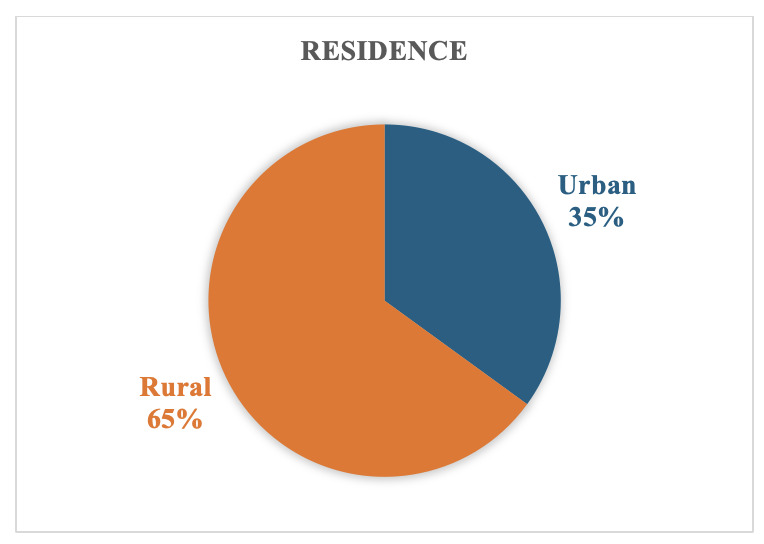
A total of 40 patients were enrolled in the study for the period of May 2024 to April 2025. The median and interquartile ranges for BMI, white blood cell count, hemoglobin, urine output, and blood pressure were 21.7 (19.80-24.15), 7.62x 10⁹/L (6.612-10.508), 14.85 g/dL (12.75-15.85), 47ml (19.50-61.75), and 93.50/61.00 mmHg (85.75/55.74 -102.50/67.25) respectively. The highest education attained by the study participants for no education, primary, and secondary education were 14 (35%), 20 (50%), and 6 (15%) respectively (Figure 1.1). Fourteen (35%) came from urban areas and 26(65%) from rural area (Figure 1.2). Thirty-four (85%) patients tested negative for HIV and six (15%) tested positive. Twelve (30%) had ASA 2, thirteen (32%) had ASA 3, eight (20%) had ASA 4, and seven (17.5%) had ASA 5. Fifteen (37.7%) had Hartmann’s procedure and twenty-five (62.5) had RPA. (Table 1.1). Thirty-seven (92.5%) patients were males and three (7.5%) were females (Figure 1.3). The median age of enrolled patients was 40.50 years (IQR, 29.75-53.00). All the patients had gangrenous SV (Table 1.1).
_co.png)
Comparison of baseline and clinical characteristics of study participants for RPA versus Hartmann’s (N=40)
A comparison was conducted between patients who underwent RPA and Hartmann’s procedure across several baseline characteristics. No statistically significant differences were found between the two groups, as all P values exceeded the conventional threshold of .05. The median age was similar between the RPA group (41 years, IQR 28–56) and the Hartmann’s procedure (40 years, IQR 30–52), p = .809. The mean BMI was 22.21 ± 4.5 in the RPA and 22.50 ± 3.4 in the Hartmann’s procedure, p = .831.The mean WBC count was slightly lower in the RPA (8.11 ± 3.11) compared to the Hartmann’s procedure (8.91 ± 3.60), though this was not statistically significant (p = .462).The RPA had a mean Hb of 14.52 ± 2.3 g/dl, while the Hartmann’s procedure had a lower mean of 13.4 ± 3.6 g/dl, with p = .256. Median urine output was 49 ml/h (IQR 23–61) in the RPA and 45 ml/h (IQR 16–68) in the Hartmann’s procedure, p = .850. Median SBP was nearly identical between groups—94 mmHg (IQR 87–102) for RPA vs 93 mmHg (IQR 84–108) for Hartmann’s, p = .918. Median DBP was 61 mmHg (IQR 56–67) for RPA and 60 mmHg (IQR 53–70) for Hartmann’s, p = .841 (Table 1.2).
Postoperative complications
There was a total of nine (22.5%) complications observed in the study. Four (26.7%) underwent Hartmann’s procedure while five (20.0%) underwent RPA showing similar complication rates between the two groups. No statistically significant difference noted in complication rates between Hartmann’s and RPA, P value = .922.
These complications were encountered postoperatively as inpatients and outpatient to the day of discharge. The types of observed complications included surgical site infection 1 (25.0%), stoma necrosis 1 (25.0%), prolapse 1 (25.0%), wound dehiscence (0.0%), stoma retraction 1 (25.0%) in Harmann’s procedure and surgical site infection 4 (80.0%), stoma necrosis 0 (0.0%), prolapse 0 (0.0%), wound dehiscence 1 (11.1%), stoma retraction 0 (0.0%) in RPA. The P value = .218 suggests no statistically significant difference in the types of complications between the groups.
In applying the Clavien-Dindo Classification for severity of surgical complications. Grade II was more common in RPA, Grade IIIb more in Hartmann’s again. There was no statistically significant difference in complication severity between the procedures, P value = .539 (Table 1.3)
Logistic regression analysis of factors associated with RPA and Hartmann’s
Logistic regression analysis in Table 1.4 presents results on factors associated with gangrenous SV among patients who underwent RPA and Hartmann’s procedure. The analysis is based on some of investigators based clinical factors which might influence surgeon’s decision to do RPA and Hartmann’s procedure. Findings showed that for every increase in WBC count was associated with reduced odds of undergoing RPA (OR 0.88), although this was not statistically significant. For every 1g/dl of Hb patients are 18% likely to undergo RPA. Per every 1000ml/hr of urine out, patients are 5% likely to undergo RPA. For every 1mmHg in SBP patients were 80% not likely to undergo RPA. Every 1 mmHg of DBP patients are 50% likely to undergo RPA and every unit of ASA score patients are 83% likely to undergo RPA However, this was not statistically significant, (all P values > .05) (Table 1.4).
Discussion
This study aimed to evaluate the clinical outcomes of patients with gangrenous SV managed through either resection and primary anastomosis (RPA) or Hartmann’s procedure at the University Teaching Hospital, Adult Hospital, Lusaka. The key outcome measures were incidence of procedures, length of hospital stay, and postoperative complication rates. The findings provide valuable insights into the viability and safety of primary anastomosis in patients with gangrenous bowel in a resource-limited setting. Few studies indicates that surgeons in resource-limited facilities can practice resection and primary anastomosis in the management of gangrenous SV with good outcomes.12
The study had a total of 40 participants, one-third underwent Hartmann’s procedure and two-thirds underwent RPA respectively. This distribution suggests a clinical preference for RPA even in the context of gangrenous bowel. This may reflect evolving surgical practices that support primary anastomosis in the absence of severe contamination or hemodynamic instability.4 Logistic regression did not reveal any statistically significant predictors of procedure choice. However, trends were observed where higher ASA scores and lower systolic BP were associated with Hartmann’s procedure, consistent with clinical judgment that reserves Hartmann’s for more unstable or comorbid patients. All the participants were black Africans with male to female distribution showing that almost all participants were males. This aligns with existing literature, which indicates that SV predominantly affects middle-aged males in sub-Saharan Africa.4,6 Sigmoid volvulus affects more male than female because of the anatomical difference, females have wider pelvis, which allows easy untwisting of colon.1 In African populations, SV predominantly affects younger adults compared to Western countries. Multiple studies across the continent report average patient ages ranging from the early 40s to late 40.13 The younger individuals are more commonly affected, possibly due to dietary or lifestyle factors prevalent in the region.4
The median initial length of hospital stay (LOS) was similar between the two procedures: 9 days (IQR 8–10) for RPA and 8 days (IQR 7–12) for Hartmann’s procedure (p = .457). This finding contrasts with literature suggesting longer LOS for patients with stomas due to postoperative care and education requirements.14 The similarity in LOS in this study could be attributed to institutional discharge policies or the relatively homogenous nature of patient acuity across groups.
Postoperative complications
Postoperative complications occurred in 22.5% of the participants, 26.7% in the Hartmann’s and 20.0% in the RPA (p = .922). No statistically significant difference was found in the overall complication rate or in the types of complications between the two procedures. The most common complication in the RPA was surgical site infection, while Hartmann’s patients presented with a broader range of stoma-related complications including prolapse, necrosis, and retraction. These findings align with existing evidence that while stoma-related complications are unique to Hartmann’s procedure, the overall morbidity is comparable between the two approaches.15
The severity of complications, assessed using the Clavien-Dindo classification, also did not differ significantly (p = .539), although Grade IIIb complications (requiring surgical intervention) were more common in Hartmann’s. This aligns with studies in similar low-resource settings that support RPA as a viable option, even in the presence of bowel gangrene, especially where patient selection and intraoperative judgment are optimal. It is important to note that the small sample size limits definitive conclusions on complication differences.
The overall mortality rate was 7.5%, with two deaths in the RPA group (8.0%) and one in the Hartmann’s group (6.67%). These rates are within the range reported in other sub-Saharan African studies (5–15%) and are likely multifactorial—attributable to delays in presentation, advanced disease, and systemic compromise due to sepsis or comorbidities.16 The absence of significant differences in mortality between the procedures indicates that both options are viable when applied with appropriate clinical judgment.
Logistic regression analysis did not find any clinical or biochemical parameter that significantly predicted the likelihood of undergoing RPA versus Hartmann’s (all p > .05). However, trends indicated that higher WBC counts, and lower systolic BP might influence surgeons to prefer Hartmann’s, likely due to concern for anastomotic safety in potentially septic or unstable patients.
This highlights the complexity of intraoperative decision-making, which is often multifactorial and depends on real-time assessment of patient condition, surgeon expertise, and available resources.
Study Limitations
A major strength of this study is its setting in a real-world, tertiary care environment where surgeries were performed exclusively by registrars, enhancing the generalizability of results. The uniform diagnosis of gangrenous SV adds specificity and clarity to outcome comparisons. However, limitations include the relatively small sample size, which may limit statistical power, and the short-term nature of outcome assessment and single-institution sampling. Long-term outcomes such as quality of life, stoma reversal rates, and recurrence were not evaluated. Additionally, some potential confounders, such as nutritional status and intraoperative contamination levels, were not recorded.
Our study had several limitations. It was limited by its relatively small cohort of patients, single-institution sampling, and observational nature of the data. This could have affected the strength of our findings. The broad range of index pathologies resulting in stoma formation may render patients with possibility of unequal clinical and immunological status. This entails that there may have been assumption bias as it was assumed that both the groups were clinically similar. Also, the study design, which focused exclusively on gangrenous SV, limited the ability to determine the overall institutional incidence and case distribution of SV, as non-gangrenous cases were not captured. The exclusion of patients requiring ICU admission may have introduced selection bias. Although ICU patients are typically the most severely ill and are often managed with Hartmann’s procedure, their exclusion may have affected the representativeness and comparative balance of the study groups. The allocation of surgical procedure was not randomized but was based on the operating surgeon’s clinical judgment, which may have introduced selection bias and affected the comparability between the PRA and Hartmann’s procedure groups.
Conclusion
In summary, this study contributes to the growing body of evidence suggesting that RPA is not only feasible but also safe in a significant proportion of patients with gangrenous SV, provided appropriate patient selection and surgical judgment are exercised. The comparable hospital stays, complication rates, and mortality outcomes underscore the potential for a more individualized approach to surgical decision-making in this population.
Recommendations
It is our recommendation that the results of this study can be used as a foundation for future clinical research on the outcomes of patients with gangrenous SV after RPA or Hartmann’s procedure in adult population and may be used to develop future treatment guidelines. Adopt evidence-based selection criteria for performing RPA in gangrenous SV. Multicentre study with a larger population size, incorporating patient-reported outcomes, cost-effectiveness analyses, and health system impacts would provide a more comprehensive assessment of optimal surgical strategies.
Ethical Approval
Ethical approval was obtained from the University of Zambia Biomedical Research Ethics Committee (UNZA-5590-2024) and the National Health Research Authority (NHRAR-R-1671/10/06/2024).
Informed Consent
Written informed consent was obtained from all participants prior to enrollment.
Data Availability
The data supporting the findings of this study are available from the corresponding author upon reasonable request
Conflict of Interest
None
Funding
None