Introduction
Musculoskeletal disorders and trauma-related conditions are major contributors to global mortality and disability, disproportionately affecting populations in low- and middle-income countries.1 Trauma accounts for more than 5 million deaths annually and contributes substantially to long-term disability and health care burden worldwide.2 Sub-Saharan Africa carries a particularly high burden of injury-related diseases while continuing to face major deficiencies in surgical infrastructure, specialist workforce distribution, and trauma care systems.3
Orthopedic care is an essential component of health care systems and plays a critical role in the management of musculoskeletal injuries and orthopedic conditions. However, hospitals providing orthopedic care remain unevenly distributed across many low- and middle-income countries because of shortages in specialist personnel, inadequate infrastructure, weak referral systems, and constrained health care financing.4,5 These disparities may limit access to specialist orthopedic care, particularly among rural and underserved populations.6,7
Previous studies in Tanzania have documented substantial limitations in surgical and emergency care delivery. Many district and regional hospitals lack the infrastructure and resources required to provide essential surgical services, including reliable electricity, anesthesia equipment, imaging capacity, and operative support systems.8,9 Specialist surgical care remains heavily concentrated within urban referral centers, while rural populations continue to experience disparities in access to specialist surgical and orthopedic services.10,11
To address these challenges, Tanzania launched the National Surgical, Obstetric, and Anesthesia Plan in 2018 to strengthen surgical service delivery through investments in workforce development, infrastructure, governance, and equitable service expansion.12 However, subsequent evaluations have reported uneven implementation and persistent regional disparities in surgical service delivery across the country.13,14
Geographic information on the availability and distribution of orthopedic care facilities is essential for workforce planning, referral network development, resource allocation, and monitoring progress toward equitable access to specialist care. Importantly, Tanzania currently lacks a centralized national registry that identifies hospitals providing orthopedic care. Most previous studies in Tanzania have focused on surgical readiness, infrastructure, or operative capacity within selected facilities rather than the national geographic distribution of hospitals providing orthopedic care.15–17 Consequently, there remains limited national-level evidence describing geographic disparities in the availability of orthopedic care, including differences in hospital tier, ownership patterns, and rural-urban representation.
This study evaluated geographic and population-adjusted disparities in the distribution of hospitals providing orthopedic care across Tanzania’s 9 health care administrative zones. It further assessed variations in hospital tier, ownership category, and rural-urban location. The findings provide baseline national data to inform orthopedic workforce planning, resource allocation, and future assessments of orthopedic service capacity, readiness, and quality of care.
Methods
Study design and setting
This was a national cross-sectional survey evaluating the geographic distribution of orthopedic care facilities across Tanzania.
The study included hospitals distributed across the country’s 9 officially designated health care administrative zones: Central, Eastern, Lake, Northern, Southern, Southern Highlands, Southwest Highlands, Western, and Zanzibar.
These administrative zones are used within the Tanzanian health system for health care planning, service coordination, and resource allocation and vary substantially in population density, infrastructure development, and health care service availability.
Study population and hospital identification
The study population included all health facilities classified as hospitals by the Tanzania Ministry of Health. Hospitals included in the final analysis were those providing orthopedic care. Because the National Health Facility Registry does not identify hospitals providing orthopedic care or the presence of orthopedic surgeons, a national survey of practicing orthopedic surgeons was used to identify these facilities.
For the purpose of this study, hospitals were considered to provide orthopedic care if they had at least one practicing orthopedic surgeon affiliated with the institution. The presence of an orthopedic surgeon was used as a proxy indicator for the availability of some level of orthopedic care. However, this definition did not necessarily reflect the quality of orthopedic care, operative capacity, infrastructure readiness, or procedural volume.
A census sampling approach was used, whereby all practicing orthopedic surgeons registered and licensed by the Medical Council of Tanganyika and with accessible contact information were invited to participate in the survey. This approach was adopted to maximize national coverage and minimize the likelihood of omitting hospitals providing orthopedic care.
Data collection and variables
Data were collected using an online questionnaire administered via Google Forms between January and February 2025. The questionnaire was developed as part of a broader national survey evaluating orthopedic and trauma services in Tanzania, with the present analysis specifically focusing on the geographic distribution of hospitals providing orthopedic care.
Survey invitations were distributed via WhatsApp and email using contact information obtained from the Tanzania Orthopedic Association membership database. Weekly reminders were sent to nonresponders over 4 consecutive weeks to improve participation.
The questionnaire collected information on hospital administrative zones and regions, hospital level (national, zonal, regional, or district), ownership category (public, private, or faith based), and rural-urban location.
Hospital location was classified as rural or urban based on respondent self-report in the survey questionnaire. Hospitals located within cities, municipalities, or major towns were classified as urban, whereas hospitals located outside these areas were classified as rural.
Secondary population data for each administrative zone were obtained from the 2022 Tanzania Demographic and Health Survey.18 Hospital classifications and ownership categories were cross-checked and verified using the Tanzania Ministry of Health Health Facility Registry.19
Data management and statistical analysis
Survey responses were exported to Microsoft Excel (Microsoft Corporation, Redmond, WA, USA) for data cleaning, coding, anonymization, and verification.
Duplicate hospital entries were identified through the cross-verification of hospital names, regions, and facility characteristics before consolidation into a single hospital-level dataset. Following consolidation, each hospital contributed a single observation to the final dataset. The hospital therefore served as the unit of analysis.
Statistical analyses were performed using the IBM SPSS Statistics version 26 (IBM Corp., Armonk, NY, USA). Descriptive statistics were used to summarize the geographic distribution of hospitals providing orthopedic care according to administrative zone, hospital level, ownership category, and rural-urban location. Categorical variables are summarized using frequencies and proportions.
To evaluate the geographic service distribution relative to population size, the number of hospitals providing orthopedic care per 1 million population was calculated for each administrative zone using zonal population estimates derived from the 2022 Tanzania Demographic and Health Survey.18
To provide complementary workforce information, the geographic distribution of responding orthopedic surgeons was summarized by administrative zone. These analyses were descriptive and intended to complement facility-level findings rather than estimate the national orthopedic workforce distribution.
Respondent orthopedic surgeon density per 1 million population was calculated using the number of survey respondents within each zone and the corresponding zonal population estimates derived from the 2022 Tanzania Demographic and Health Survey.18
Bivariate analyses were performed to determine whether higher-level hospitals, private hospitals, and urban-based hospitals were disproportionately concentrated within specific geographic areas. Comparisons between categorical variables were conducted using the chi-square test or Fisher’s exact test, as appropriate. Odds ratios (ORs) with corresponding 95% confidence intervals (CIs) were calculated to estimate the strength of these associations. Statistical significance was set at P < .05.
Geospatial analysis
Geospatial analysis was conducted using the QGIS version 3.42 (Quantum Geographic Information System). Administrative boundary shape files for Tanzania were imported together with geocoded hospital location data. The “Count Points in Polygon” tool was used to calculate the number of hospitals providing orthopedic care within each administrative zone. Choropleth maps were subsequently generated to visualize zonal variation in the distribution of hospitals with orthopedic services, with graduated color intensity representing the distribution of hospitals across Tanzania.
Measures to reduce bias
To minimize selection bias, all actively practicing orthopedic surgeons with accessible contact information were invited to participate. Weekly reminders and multiple communication platforms were used to improve participation and reduce nonresponse bias. Surgeon-reported data were considered appropriate because participating orthopedic surgeons had direct knowledge of their affiliated institutions. In addition, hospital characteristics were cross-checked against the Ministry of Health Health Facility Registry to improve data accuracy. All responses were anonymized prior to the analysis to reduce social desirability bias.
Results
Study participation and hospital identification
A total of 171 responses were received from practicing orthopedic surgeons, yielding a response rate of 77.7%. These responses identified 92 distinct hospitals providing orthopedic care, all of which were included in the final hospital-level analysis. The identified facilities represented 19.0% of the 483 institutions officially designated as hospitals by the Tanzania Ministry of Health and were affiliated with at least one practicing orthopedic surgeon.
Geographic distribution of hospitals providing orthopedic care
The 92 orthopedic care facilities identified in the study were distributed across all 9 health care administrative zones of Tanzania within a national population of approximately 61.7 million (Table 1).
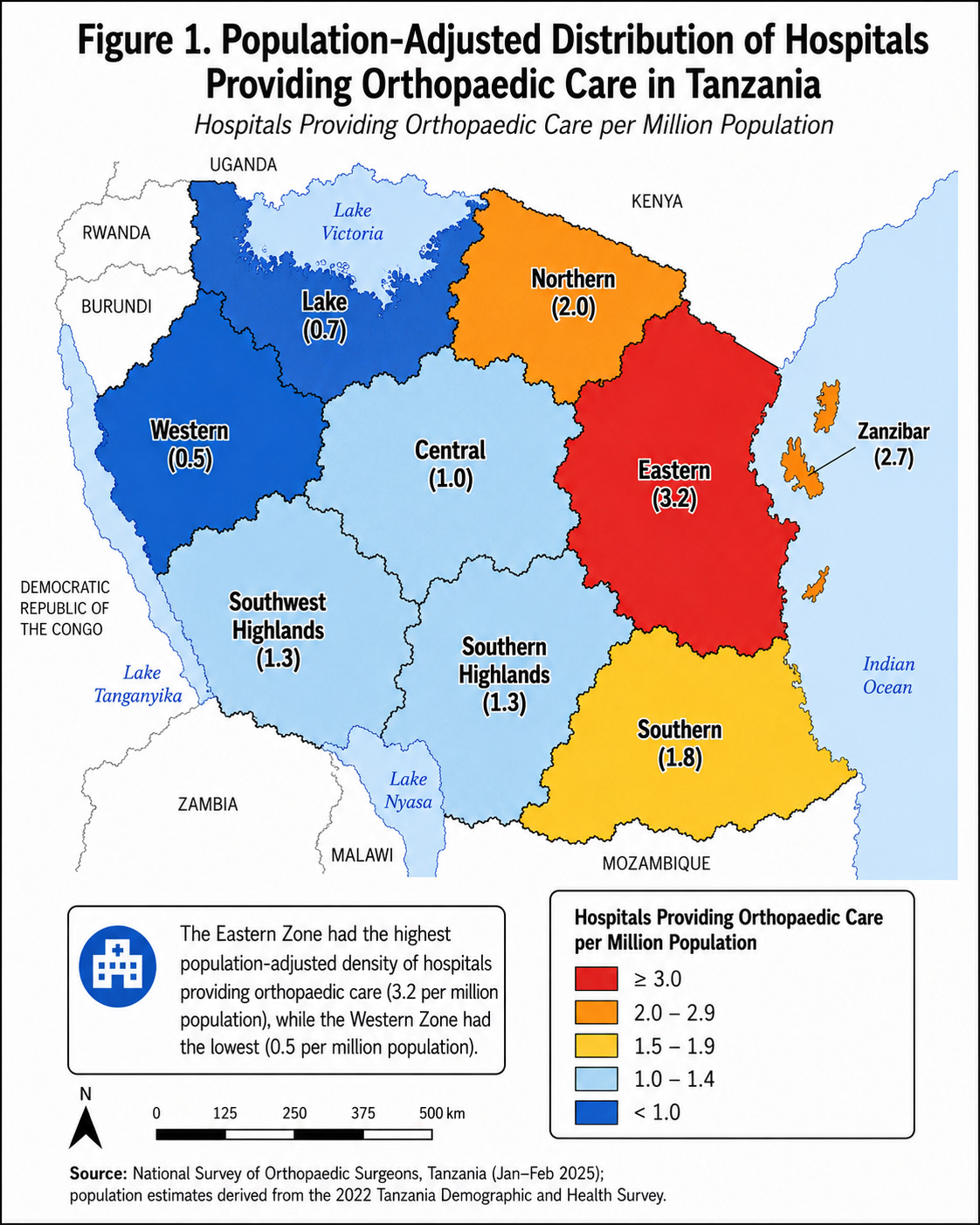
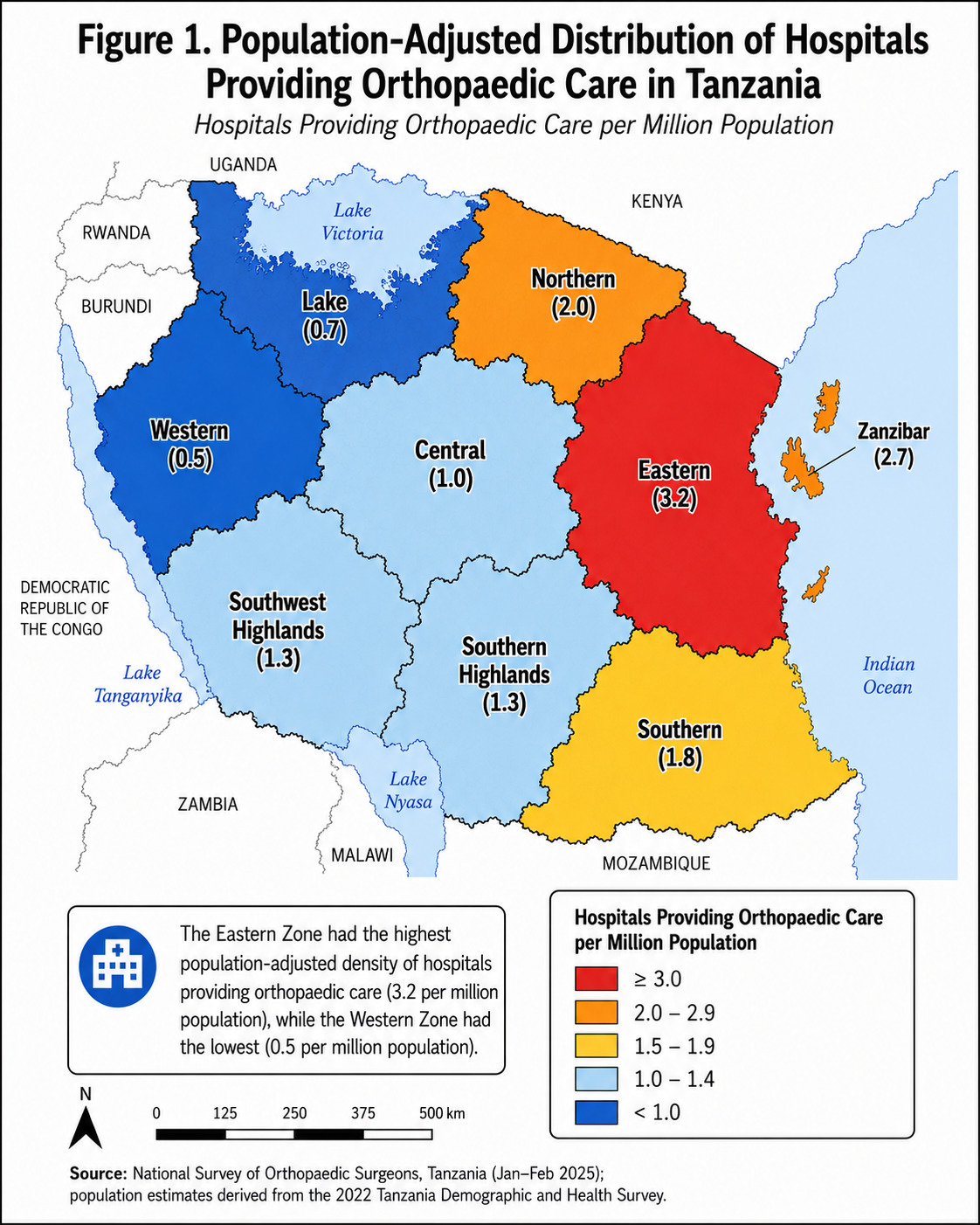
Geographic variation in the distribution of orthopedic health care facilities was observed across the country. The Eastern Zone accounted for more than one-third of all identified facilities (37.0%), followed by the Northern (15.2%) and Lake (12.0%) Zones, whereas the Western Zone had the lowest representation (3.3%). Population-adjusted analysis demonstrated marked zonal variation, with the Eastern Zone having the highest number of hospitals per 1 million population (3.2 per million population) compared with 0.5 per million population in the Western Zone.
The geographic distribution of responding orthopedic surgeons also varied substantially across zones. A total of 171 surgeon responses corresponded to a national respondent density of 2.77 orthopedic surgeons per million population. The Eastern Zone demonstrated the highest respondent density (6.51 per million population), followed by the Northern Zone (4.83 per million population), whereas the Western Zone had the lowest respondent density (0.68 per million population). Similar to the distribution of orthopedic care facilities, respondent surgeon density was concentrated within the Eastern and Northern Zones.
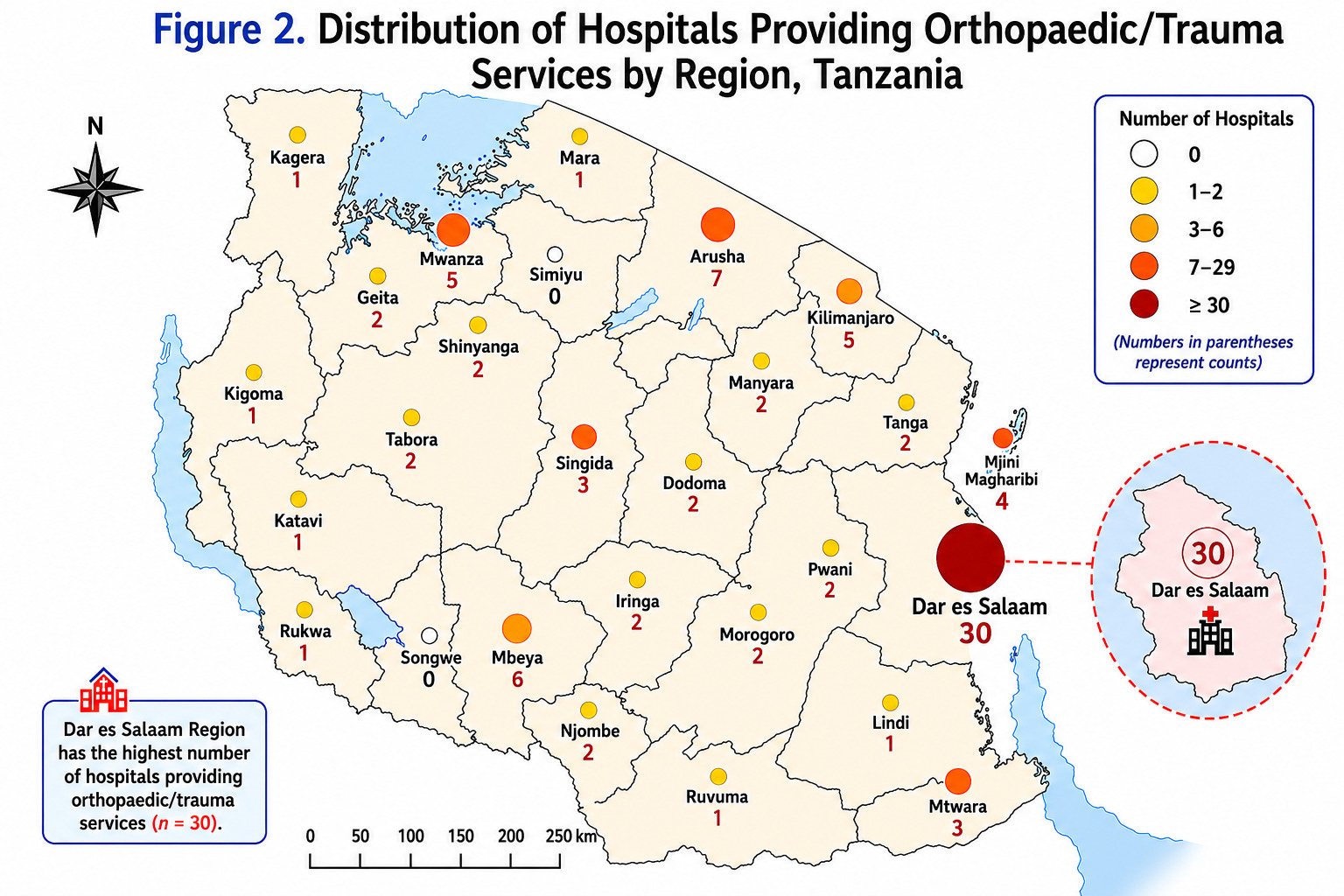
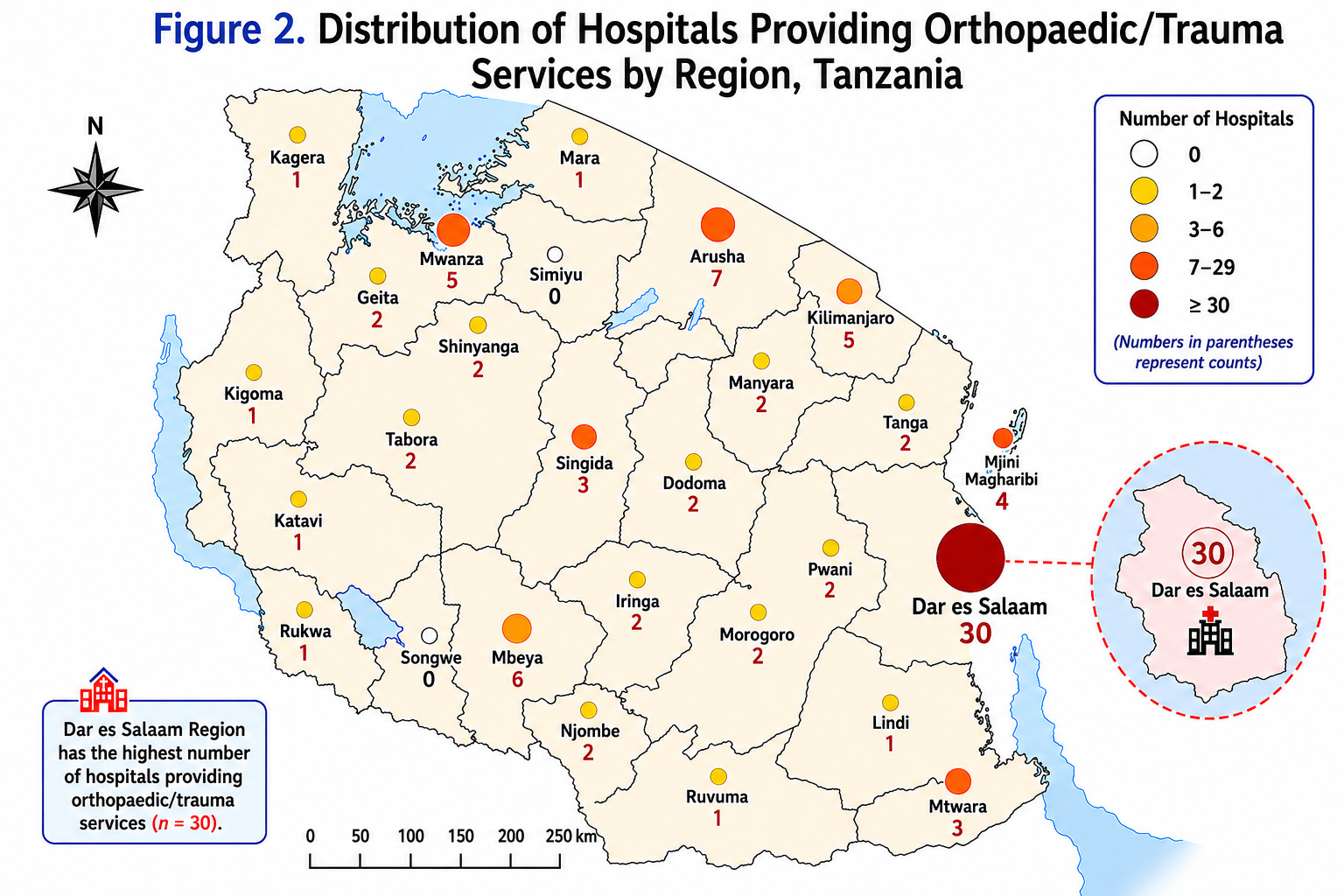
These zonal differences are illustrated in Figure 1, using a graduated choropleth map. Figure 2 further illustrates regional variation in the distribution of orthopedic care facilities, with the highest number of identified facilities observed in Dar es Salaam, followed by the Arusha, Mbeya, Mwanza, and Kilimanjaro regions.
Hospital characteristics by zone
Regional hospitals constituted the largest category of facilities identified in the study (53.3%), followed by district (25.0%), zonal (18.5%), and national hospitals (3.3%) (Table 2). Higher-level facilities were predominantly concentrated within the Eastern Zone, which accounted for 66.7% of the national hospitals and 52.9% of the zonal hospitals identified.
Public hospitals represented nearly half of all identified facilities (47.8%), whereas private and faith-based hospitals accounted for 27.2% and 25.0%, respectively (Table 3). Private hospitals showed a marked concentration within the Eastern Zone, whereas faith-based hospitals were more broadly distributed across multiple zones.
Most facilities were located in urban settings (79.3%), whereas 20.7% were situated in rural areas. Urban-based facilities were predominantly concentrated within the Eastern Zone, whereas rural facilities were more frequently identified in the northern, central, and southern highland zones. Faith-based institutions accounted for a substantial proportion of rural facilities identified in this study.
Bivariate analysis of geographic distribution patterns
Hospitals located in Dar es Salaam were more likely to have tertiary-level facilities (national or zonal hospitals) than hospitals in other regions (OR = 3.40, 95% CI, 1.22-9.50; p = .032). A similar trend was observed within the Eastern Zone, although this did not reach statistical significance (OR = 2.60, 95% CI, 0.95-7.15; p = .103).
Private ownership showed a marked concentration within the Eastern Zone, where hospitals were significantly more likely to be privately owned than facilities in other zones (OR = 8.20, 95% CI, 2.90-23.14; p < .001). Similarly, hospitals in Dar es Salaam were more likely to be privately owned than hospitals in other regions (OR = 4.06, 95% CI, 1.54-10.69; p = .004).
Hospitals within the Eastern Zone and Dar es Salaam were also more likely to be located in urban settings (OR = 6.63, 95% CI, 1.43-30.83; p = .016 and OR = 5.30, 95% CI, 1.13-24.65; p = .042, respectively).
In contrast, faith-based hospitals were significantly more likely to be located in rural settings than were non-faith–based institutions (OR = 5.65, 95% CI, 1.89-16.85; p = .003). Hospitals within the Northern Zone were also more likely to be faith-based institutions than hospitals in non-northern zones (OR = 4.20, 95% CI, 1.28-13.80; p = .032).
Discussion
Principal findings
This study demonstrated substantial national geographic disparities in the distribution of hospitals providing orthopedic care across Tanzania. The identified facilities were concentrated within the Eastern Zone and other urbanized regions, while several peripheral zones demonstrated lower representation and lower population-adjusted distribution. The study further demonstrated important zonal differences in the hospital tier, ownership category, and rural-urban location.
Geographic and population-adjusted disparities in orthopedic care distribution
The concentration of orthopedic care facilities within the Eastern Zone likely reflects the historical centralization of specialist health care infrastructure, workforce availability, and referral services within Dar es Salaam and the surrounding urban areas. Similar patterns of specialist surgical service concentration have been described across low- and middle-income countries, where tertiary hospitals, specialist personnel, and operative resources are disproportionately located in major urban centers.3,11
By contrast, lower facility representation in peripheral zones may reflect long-standing disparities in infrastructure development, workforce distribution, and institutional surgical capacity. The uneven geographic distribution of orthopedic care facilities may reflect geographic disparities in access to specialist orthopedic services, particularly for populations located far from higher-level facilities.5–7,10 The population-adjusted findings strengthen this interpretation by demonstrating that disparities persisted even after accounting for zonal population size.
The present study identified approximately 1.5 orthopedic care facilities per 1 million population nationally, with substantial variation across zones, ranging from 0.5 facilities per million population in the Western Zone to 3.2 facilities per million population in the Eastern Zone. Comparable regional studies from Ethiopia have reported approximately 2.8 hospitals providing emergency and essential surgical care per 1 million population, although these studies assessed broader surgical infrastructure rather than orthopedic-specific care.20
The distribution of responding orthopedic surgeons demonstrated a similar pattern, with the highest respondent densities observed in the Eastern and Northern Zones and the lowest density observed in the Western Zone. Although these estimates represent survey respondents rather than the complete national orthopedic workforce, the findings suggest that geographic disparities in orthopedic care availability may reflect both the concentration of health care facilities and the concentration of the orthopedic workforce. The concordance between facility density and respondent surgeon density further highlights persistent geographic inequities in access to specialist orthopedic care across Tanzania.
Population-adjusted estimates facilitate comparisons across geographic areas, but there are currently no widely accepted national or international benchmarks defining the recommended number of hospitals providing orthopedic care per population. Therefore, the present findings should be interpreted primarily as indicators of relative geographic distribution rather than measures of adequacy. Nevertheless, the marked variation observed between zones highlights important disparities in the availability of orthopedic care facilities across Tanzania and identifies areas that may benefit from targeted workforce and infrastructure investment.
Distribution by hospital tier and urban concentration
Higher-level facilities were predominantly concentrated within the Eastern Zone, including most national and zonal hospitals identified in this study. This pattern is consistent with the concentration of tertiary referral infrastructure, specialist training institutions, and advanced diagnostic and operative capacities within major urban referral centers.3,11 Although regional hospitals represented the largest category of facilities nationally, the uneven distribution of higher-level institutions highlights important geographic differences in the availability of specialist orthopedic care facilities across Tanzania.5,6,10
The predominance of urban-based facilities also reflects broader rural-urban disparities in the distribution of specialist surgical services. Previous studies in Tanzania have documented limitations in emergency and surgical capacity at lower-level hospitals, including gaps in essential infrastructure, anesthesia systems, oxygen delivery, and operative support resources.8,9 These structural limitations are important when interpreting the distribution of hospitals associated with orthopedic services across the country.
Role of private and faith-based hospitals
Ownership patterns revealed further variations in the distribution of hospitals providing orthopedic care. Private hospitals were concentrated in Dar es Salaam and the Eastern Zone, likely reflecting the urban concentration of specialist workforce, patient volume, purchasing power, and private health sector investment.3,12 Although private sector growth may increase the overall number of facilities associated with orthopedic service provision, its concentration within major urban centers may reinforce the geographic imbalance in specialist surgical service distribution.
By contrast, faith-based hospitals accounted for a substantial proportion of the rural facilities identified in the study. This finding is important because faith-based institutions have historically contributed to health care delivery within underserved areas in Tanzania and other sub-Saharan African settings.12,14 Their roles highlight the importance of including nonstate providers in surgical planning, referral coordination, and workforce support strategies.
Similar patterns of variation in the distribution and contribution of public, private, and faith-based health care facilities have been reported across the East, Central, and Southern African regions, highlighting the important role of nonstate providers in expanding access to surgical and specialist care, particularly in underserved settings.21
Health system implications
These findings have important implications for national surgical planning and orthopedic workforce distribution in Tanzania. The marked concentration of hospitals with orthopedic services within urbanized zones, particularly the Eastern Zone, suggests the persistent centralization of specialist trauma and orthopedic care within major referral corridors. Such a geographic imbalance may contribute to prolonged referral pathways, delayed access to definitive fracture care, and increased pressure on tertiary referral institutions serving large catchment populations.3,5–7 Given the time-sensitive nature of trauma care, unequal geographic distribution of orthopedic care may further exacerbate disparities in surgical access between rural and underserved populations.
The observed disparities suggest a need for targeted strengthening of orthopedic care-related services within underserved zones, particularly through specialist workforce deployment, regional- and district-level infrastructure development, and improved referral coordination. Strengthening peripheral hospitals may help reduce dependence on overcrowded urban referral centers, while improving timely access to emergency orthopedic and trauma care. Previous studies from Tanzania have documented persistent limitations in surgical infrastructure, imaging availability, anesthesia systems, and operative support resources at lower-level facilities, which may further constrain the expansion of specialist orthopedic services outside major urban centers.8–10
These priorities align with the goals of Tanzania’s National Surgical, Obstetric, and Anesthesia Plan, which emphasizes workforce strengthening, infrastructure development, governance, referral systems, and equitable surgical service expansion.12,13 The present findings provide baseline national geospatial data that may help inform the implementation and monitoring of National Surgical, Obstetric, and Anesthesia Plan priorities related to orthopedic and trauma care distribution across administrative health care zones.
This study also highlights the importance of integrating nonstate providers into national surgical planning strategies. Faith-based hospitals accounted for a substantial proportion of the rural facilities identified in this study and may therefore play an important role in improving surgical service coverage within underserved populations. Similar contributions of faith-based institutions to health care delivery in resource-limited settings have been reported in other sub-Saharan African contexts.12,14 Strengthening collaboration between the public sector, the private sector, and faith-based institutions may support a more equitable distribution of specialist orthopedic services nationally.
Finally, this study highlights the need for a centralized national registry identifying hospitals providing orthopedic care. Existing assessments have largely focused on surgical readiness or facility capacity rather than on national geographic distribution.8,13 A standardized national registry could support workforce planning, referral network development, resource allocation, infrastructure prioritization, and monitoring of changes in orthopedic care distribution over time, consistent with broader global surgery recommendations emphasizing surgical system mapping and equitable access to care.3,12
Strengths and limitations
This study has several strengths. First, it provides national-level data on the geographic distribution of hospitals providing orthopedic care across all 9 health care administrative zones in Tanzania. Second, the study used a census sampling approach, inviting all practicing orthopedic surgeons with accessible contact information to maximize national coverage and minimize the likelihood of omitting eligible facilities. Third, the study combined geospatial mapping with population-adjusted analyses, allowing assessment of both the absolute and relative distribution of orthopedic care facilities across geographic regions. Finally, the inclusion of respondent orthopedic surgeon density provided complementary workforce information, enabling a broader assessment of geographic disparities in access to orthopedic care.
Several limitations should be considered when interpreting these findings. First, hospitals providing orthopedic care were identified based on surgeon reports and the presence of at least one practicing orthopedic surgeon affiliated with the institution. Consequently, the classification of facilities as providing orthopedic care may not necessarily reflect the full range of orthopedic services available, operative capacity, infrastructure readiness, or service volume at individual hospitals. In addition, some hospitals without orthopedic surgeons may still provide elements of orthopedic trauma care through general surgeons or other nonspecialist providers, particularly in resource-constrained settings where specialist orthopedic workforce availability is limited.22,23 Such facilities would not have been identified by the present methodology and may therefore be underrepresented.
Second, participant recruitment relied on contact information available through the Tanzania Orthopedic Association. Although a census sampling approach was used and a high response rate was achieved, some eligible orthopedic surgeons may not have been captured within the available contact database, potentially resulting in underrepresentation of some facilities. In addition, information on the geographic location of nonresponding surgeons was not available; therefore, it was not possible to assess whether nonresponse was concentrated within specific regions or underserved rural areas.
Third, the analysis of orthopedic surgeon distribution was based on survey respondents rather than the complete national orthopedic workforce. Therefore, the reported surgeon density estimates should be interpreted as respondent density and may not fully represent the national workforce distribution.
Some bivariate analyses yielded wide CIs, likely reflecting the small number of hospitals within certain geographic and facility subgroups. These findings should therefore be interpreted with caution.
Finally, the study did not assess facility-level capacity indicators such as operating room availability, bed capacity, intensive care services, diagnostic resources, or operative volume. Consequently, the findings describe the geographic distribution of orthopedic care facilities rather than their capacity to deliver orthopedic services.
Conclusions
This study demonstrated substantial national disparities in the geographic- and population-adjusted distribution of hospitals associated with orthopedic service provision across Tanzania. Facilities providing orthopedic care, including higher-level referral hospitals, were predominantly concentrated within the Eastern Zone and major urban regions, while several peripheral zones demonstrated markedly lower facility representation relative to population size. Important differences were also observed in the hospital tier, ownership category, and rural-urban distribution, with faith-based institutions contributing substantially to rural facility distribution.
These findings highlight the persistent geographic imbalance in the distribution of specialist orthopedic and trauma services within the Tanzanian health system. Strengthening orthopedic service distribution in underserved regions through targeted workforce deployment, infrastructure development, and coordinated surgical system planning may help to reduce existing regional disparities. These findings further provide baseline national geospatial data that may support future orthopedic workforce planning, resource allocation, and monitoring of orthopedic care distribution across Tanzania. The identified facilities may also serve as a foundation for future studies evaluating orthopedic service capacity, readiness, and quality of care.
Acknowledgments
The authors thank the Muhimbili University of Health and Allied Sciences Research Ethics Committee, all study participants, and the research assistants for their valuable contributions to this study.
Declaration of AI Use
Quillbot software was used for language editing and grammar improvement during manuscript preparation. OpenAI was used solely to assist with the aesthetic refinement of the geospatial figures, including color enhancement, title formatting, and descriptive figure annotations. All geospatial analyses, hospital mapping, and figure generation were performed independently by the authors using QGIS version 3.42 (Quantum Geographic Information System). Artificial intelligence was not used for data processing, geospatial or statistical analyses, interpretation of findings, or scientific decision-making. All figures, analyses, and manuscript content were critically reviewed, verified, and approved by the authors.
Ethical Approval
Ethical clearance was granted by the Muhimbili University of Health and Allied Sciences institutional review board (Ref. No. DA282/298/01.C/2526).
Informed Consent
Informed consent was obtained from all participants. Participation was voluntary, and refusal was inconsequential to the participant. No identifiable personal data were collected. All responses were anonymized prior to analysis to ensure participant and hospital confidentiality. The study adhered to the ethical guidelines of the Declaration of Helsinki.
Data Availability
The dataset is available from the authors upon reasonable request and within the provisions of the ethical review board.
Conflict of Interest
None.
Funding
None.