Introduction
The surgeon density in East, Central and Southern Africa is only 0.53 surgeons per 100,000 people, far below the World Health Organization’s recommended 20–40 per 100,000.1,2 Simply put, 1 specialist surgical provider in East, Central, and Southern Africa does the work of 40 in high-income settings. This challenge is what the College of Surgeons of East, Central and Southern Africa (COSECSA) works to address through training programs in 144 hospitals across 24 countries.3 As a regional surgical college without walls, training occurs everywhere, from district hospitals to sub-specialized, high-end facilities. In 7 years, COSECSA has nearly doubled the surgical workforce across the regions.4
Despite these gains, access to continuous sub-specialized surgical education remains one of the major challenges to equitable health care delivery in sub-Saharan Africa. Many training institutions lack subspecialty faculty and services to provide consistent exposure to complex surgical fields such as oncology, cardiothoracic, vascular, and transplant surgery.5,6 To address this gap, the COSECSA, in partnership with the Center for Equity in Global Surgery (CEGS) at the University of Global Health Equity, launched the COSECSA-CEGS Virtual Lecture Series in 2021—a collaborative initiative designed to expand access to high-quality, context-relevant surgical training across regions.5
Since its inception, the series has become a cornerstone of COSECSA’s scalable, online continuing education efforts, providing open-access, interactive learning to surgical trainees, medical officers, and faculty across Africa. In its first 2 years alone, 2,015 attendees from 48 countries participated, with learners reporting high satisfaction with the series, including a mean overall satisfaction score of 4.5 out of 5; 78.6% indicated that the lectures contributed positively to examination preparation, and 99.2% reported willingness to attend future lecture series.5 Each year, the program has evolved based on participant feedback, technological innovation, and a shared commitment to equity in surgical education.
Purpose and Design
The lecture series was established to bridge the persistent gap in subspecialty exposure across COSECSA training centers.5 Delivered synchronously through a cloud-based video conferencing platform, it connects learners and faculty in real time across countries and disciplines. Sessions are led by experienced facilitators drawn from both COSECSA member institutions and global partner organizations, combining African-led expertise with international collaboration.5
Each session features case-based learning, imaging discussions, and live questions and answers, fostering both technical learning and professional mentorship. Recordings and materials are made available afterward to enhance accessibility for participants balancing busy clinical schedules.
Highlights of the 2024 and 2025 Series
Building on 4 years of continued collaboration, the 2024 and 2025 COSECSA-CEGS Virtual Lecture Series demonstrates continued engagement with accessible, high-quality subspecialty surgical education across regions (Table 1). In 2024, the series comprised 19 live virtual lectures, attracting 1,419 registrations and a cumulative attendance of 3,982, delivering approximately 32 hours and 42 minutes of live, interactive instruction. In 2025, 19 lectures were offered with registrations increasing to 1,702 and cumulative attendance reaching 3,801, amounting to 34 hours and 25 minutes of instruction. Although cumulative attendance decreased modestly from 2024 to 2025, the increase in registrations suggests sustained interest and broad reach across the regions. In both years, COSECSA trainees represented over one-third of attendees, while qualified COSECSA practicing surgeons and non-COSECSA trainees also participated, indicating engagement across various stages of surgical training and practice.
Across both the 2024 and 2025 series, sessions consistently addressed a broad range of solid organ and thoracic malignancies, including gastrointestinal, genitourinary, endocrine, neuro-oncologic, and breast cancers, alongside topics in cardiothoracic surgery, vascular surgery, thoracic trauma, and the surgical management of infectious conditions, such as pulmonary tuberculosis. While core topics remained consistent across years, selected sessions were refined or expanded to reflect emerging training needs and participant feedback.
The lectures were delivered by a team of regional and international faculty from institutions including the University of Global Health Equity, COSECSA, Rwanda Military Hospital, Tenwek Hospital, University of Lusaka, Addis Ababa University, Alzaiem Alazhari University, Pan-African Academy of Christian Surgeons, and Kamuzu Central Hospital (Malawi), alongside partners from Harvard Medical School and Brigham and Women’s Hospital, the University of Wisconsin, the University of Washington, Yale University, the University of North Carolina, Guy’s and St Thomas’ NHS Foundation Trust, and Memorial Sloan Kettering Cancer Center. Their combined expertise across cardiothoracic, vascular, urologic, endocrine, orthopedic, and general surgery contributed to a comprehensive and contextually relevant learning experience for participants.
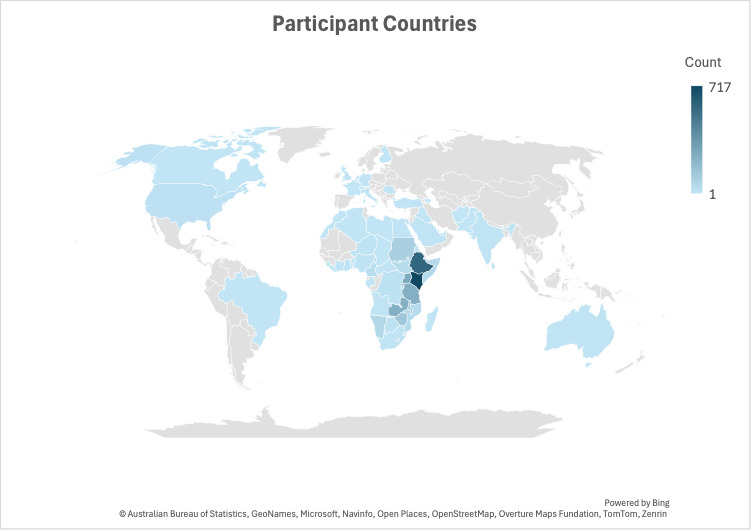
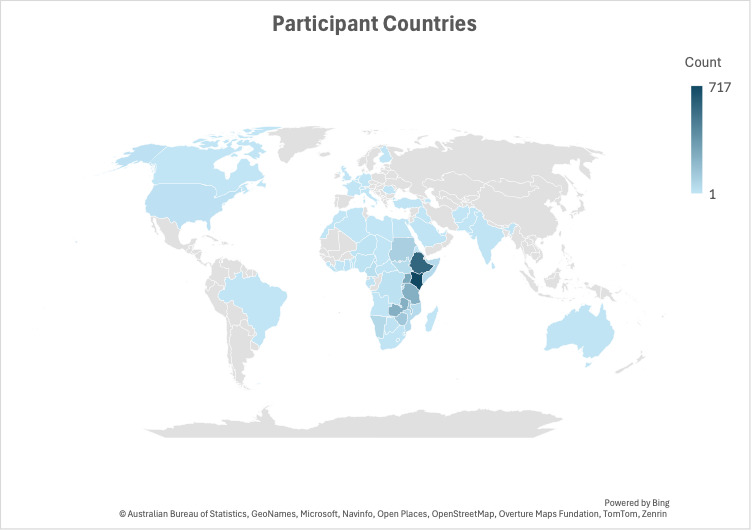
Participants in the 2024 and 2025 series represented multiple regions across Africa, including East, Central, Southern, West, and North Africa, with additional participation from institutions outside the continent (Figure 1). This regional diversity highlights the series’ accessibility and its relevance to trainees and clinicians working in varied health system contexts.
Transforming Learning Through Partnership and Technology
The COSECSA-CEGS partnership exemplifies how collaboration and technology can transform surgical education in resource-constrained settings. Similar models of technology-enabled, cross-institutional collaboration have been described in the literature, particularly in response to the COVID-19 pandemic, where virtual platforms facilitated global connectivity, knowledge exchange, and continuity of training across geographically dispersed learners.7,8 Hybrid and virtual global surgery courses have demonstrated that interactive, cross-site learning can enhance interdisciplinary engagement while expanding access to training, although persistent inequities in participation and digital infrastructure remain.9
In this context, the COSECSA-CEGS model represents a low-cost, high-yield approach to continuous professional development, leveraging volunteer faculty from both African and international institutions to deliver accessible, high-quality education. Comparable initiatives using volunteer-driven, technology-supported teaching platforms have been shown to provide scalable and cost-effective alternatives to traditional in-person training, particularly in settings with limited faculty availability.7 Beyond imparting technical knowledge, such models foster mentorship, inclusion, and shared learning, critical elements for strengthening surgical ecosystems and professional networks across regions.
Furthermore, the development of recorded lecture repositories aligns with emerging best practices in virtual surgical education, enabling asynchronous, self-paced learning and sustained access to curated educational content.7 The COSECSA-CEGS Virtual Lecture Series, as recorded lecture repositories, exemplify this approach by providing trainees with ongoing access to high-quality educational materials beyond live sessions. These approaches not only extend the lifespan of teaching sessions but also contribute to more equitable learning opportunities for trainees who may face time, geography, or resource constraints.
Conclusion
The sustained engagement observed across the 2024 and 2025 COSECSA-CEGS Virtual Lecture Series underscores the importance of equitable, platform-based approaches that enable surgical trainees in low- and middle-income countries to access specialized education that would otherwise remain inaccessible due to faculty, infrastructure, and geographic constraints. As demonstrated over consecutive years, such platforms play a critical role in bridging persistent gaps in subspecialty exposure and supporting regionally relevant training at scale. Sustaining and expanding these efforts will require deliberate investment in digital learning infrastructure, faculty engagement, and institutional partnerships. Continued support from governments, academic institutions, and funding partners is essential to ensure that initiatives like the COSECSA–CEGS Virtual Lecture Series remain accessible, responsive, and sustainable—strengthening surgical training pathways and contributing meaningfully to health-system capacity across Africa.
Expert Opinion
The sustained delivery of the COSECSA-CEGS Virtual Lecture Series illustrates the growing importance of equity-driven, platform-based education in addressing persistent gaps in subspecialty surgical training in low- and middle-income countries. While virtual learning cannot substitute for firsthand surgical experience, it offers a scalable mechanism to expand access to specialized knowledge, mentorship, and professional networks that are otherwise constrained by geography and workforce shortages. The strength of this model lies in its African-led design, contextual relevance, and continuity over time. Future efforts should prioritize formal integration of virtual subspecialty education into surgical training pathways, explore mechanisms for credentialing and continuing professional development recognition, and assess downstream impacts on trainee performance, clinical decision-making, and workforce retention. Sustained investment in faculty support and digital infrastructure will be critical to realizing the long-term potential of such platforms.
Acknowledgments
None.
Ethical Approval
Ethical approval was not required for this Perspective article, as it did not involve human participants, human data, or animal subjects.
Informed Consent
Informed consent was not required as this Perspective article did not involve human participants.
Data Availability
The materials supporting the findings discussed in this perspective are available from the corresponding author upon reasonable request.
Conflict of Interest
Barnabas Tobi Alayande, Michael Mwachiro, and Abebe Bekele serve as editors of the East and Central African Journal of Surgery. In line with journal guidelines, they were blinded from the review process at submission and had no involvement in the editorial assessment, peer review, or decision-making process for this manuscript. The remaining authors declare no competing interests.
Funding
None