Introduction
Student surgical societies, established as structured platforms dedicated to promoting interest in and engagement with surgical specialties, have been present in Africa since 2006, when the earliest documented society was founded at the University of Cape Town, South Africa.1,2 They host events aimed at enhancing the undergraduate surgical curriculum and offer additional extracurricular surgical experiences.1 These societies play a crucial role during the formative years of aspiring surgeons. Notably, many undergraduate students consider participation in surgical societies invaluable for honing their skills and reinforcing their knowledge.1,3
The number of women in medicine has steadily increased over the past few decades, marking a historic shift.4,5 In 2017, female medical school matriculants in the United States surpassed male matriculants for the first time, accounting for 50.7% of matriculants, up from 49.8% in 2016.6,7 This upward trend has been reflected across most medical specialties, including surgery.8,9 However, the increased presence of women in medicine has not translated into equivalent advancement within surgery.10,11
Numerous studies have examined the causes of persistent gender disparities within surgical societies and senior leadership roles.12 One commonly cited explanation is the “pipeline effect,” which attributes current leadership imbalances to the historically lower numbers of women in medical school and surgery residency programs.13 This theory suggests that increasing the number of female entrants will eventually lead to equality.12 However, studies indicate that, at the current rate, bridging the gender gap in entry-level and senior positions would take decades.13
This historical imbalance is particularly acute across Africa. A recent comprehensive workforce analysis by the Global Anaesthesia, Surgery, and Obstetric Collaboration; the College of Surgeons of East, Central and Southern Africa; and the Royal College of Surgeons in Ireland revealed that female specialists constitute only 10% of the active surgical workforce.14 Alarmingly, this proportion has remained stagnant since 2015 despite a 42% overall increase in the continent’s surgical workforce density.14
To address these persistent systemic barriers, advocacy and peer-support networks such as Women in Surgery Africa have emerged to foster early mentorship and professional development for female trainees.15 However, although initiatives such as Women in Surgery Africa target early residency, the roots of this stagnation may take hold much earlier.
Previous studies have examined downstream challenges encountered by established African women surgeons, such as gender-based discrimination, work-family balance, and a severe lack of accessible role models.16–19 However, data focusing on the undergraduate level remain limited. Specifically, gender disparities within African student surgical societies, the literal origin point of the surgical pipeline, remain unexplored.
By evaluating the gender landscape within participating African student surgical societies, this study seeks to contribute meaningfully to the global discussion of gender equity in medical education and surgical practice.
Methods
This multicenter cross-sectional questionnaire-based study was conducted among members of undergraduate student surgical societies in 5 African countries. The study aimed to explore gender inequality within African student surgical societies and its effects on the career aspirations and experiences of medical students. Six undergraduate student surgical societies participated, representing public and private universities in Nigeria, Kenya, Rwanda, Uganda, and South Africa. The societies function as extracurricular organizations that promote undergraduate surgical education, skills acquisition, mentorship, and research. Participating societies included the Students’ Surgical Society, Zaria; Students’ Surgical Forum; University of Rwanda Students’ Surgical Society; TUKS University Student Surgical Society; Intare Surgery Interest Group; and Makerere University Surgery Society, Kampala. The study population comprised registered undergraduate members of the participating societies. Eligible participants included male and female medical students who were active members during the study period. Students who declined consent, submitted incomplete questionnaires, or were no longer active members were excluded.
The 20-item questionnaire (Supplementary File) was developed and evaluated for content through expert review by a panel of 3 specialists, including 2 academic surgeons and 1 biostatistician. Feedback from the panel was incorporated to optimize item clarity, relevance, and structural flow. Following expert review, the draft instrument was pilot-tested among 15 undergraduate medical students from similar academic backgrounds to assess readability, formatting, and completion time before deployment. Data from the pilot test were excluded from the final analysis. The questionnaire included open- and closed-ended questions assessing motivations, challenges, leadership participation, and perceptions of gender equity.
A total of 812 eligible members across the participating societies were invited to participate, yielding a final sample of 268 respondents (33% response rate) from 5 African countries. The sex distribution showed a slight male predominance, with 55.2% (n = 148) male and 44.8% (n = 120) female participants. Yamane’s formula for quantitative data was used to calculate the sample size of 268 used in this study (N = 812; e = 0.05). Data were analyzed using SPSS version 24 (IBM Corp, Armonk, NY, USA). Recruitment occurred between November 2024 and March 2025. Society presidents and executive committees disseminated the survey link through official WhatsApp groups, Telegram channels, email lists, and other recognized communication platforms. Information about executive leadership positions within the participating societies was obtained from official executive records provided by each society rather than from questionnaire responses.
Descriptive statistics were calculated using respondent counts (n) and proportions (N). For survey items permitting multiple responses, percentages were calculated using the total number of unique respondents in the respective sex group or overall cohort as the denominator (N). Because individual respondents could select more than 1 response option, the reported category percentages for multiple-response items reflect option prevalence and sum to more than 100%.
Associations between categorical variables were assessed using the Pearson χ2 test or Fisher exact test, as appropriate. Statistical significance was set at P < .05. Ethical approval was obtained from the Health Research Ethics Committee of Ahmadu Bello University Teaching Hospital, Shika, Zaria, Nigeria (approval no. HREC/53199546; November 15, 2024). The approval covered this multicenter anonymous online survey involving collaborating undergraduate student surgical societies in Nigeria, Kenya, Rwanda, Uganda, and South Africa.
Before survey distribution, administrative permission to circulate the questionnaire was obtained from the executive leadership of each participating society. Because the study involved an anonymous, minimal-risk online questionnaire and did not collect personally identifiable information, no additional institutional ethics approvals were required at the collaborating universities under the approved protocol.
Electronic informed consent was obtained from all participants before they began the questionnaire. Participants ranged in age from 16 to 34 years. Participants younger than 18 years were included only in accordance with the ethics committee–approved protocol. Where applicable, assent procedures and/or waivers of parental consent were implemented as approved by the ethics committee. Participation was voluntary, and respondents could withdraw at any time before submitting the questionnaire. Confidentiality, anonymity, and data protection were maintained throughout the study.
To map the distribution of undergraduate student surgical societies across Africa, a systematic desktop search was conducted between November 1, 2024, and January 31, 2025. Searches were performed using Google Search, Google Scholar, PubMed, and professional and social media platforms, including LinkedIn, X (formerly Twitter), Facebook, and Instagram. Organizational directories from the International Student Surgical Network, the Federation of African Medical Students’ Associations, and the International Federation of Medical Students’ Associations were also reviewed. Search terms included combinations of (“student surgical society” OR “surgical interest group” OR “surgery student society” OR “surgical club”) AND (“country name”) for all 54 recognized African sovereign states. A student surgical society was included in Table 1 if it met at least 1 of the following criteria:
-
Official affiliation with a recognized African university or medical school,
-
A verified active digital presence, such as a website, social media account, or event publication, within the preceding 10 years (2015–2025).
Societies without verifiable institutional links or active operations during the defined period were excluded.
Results
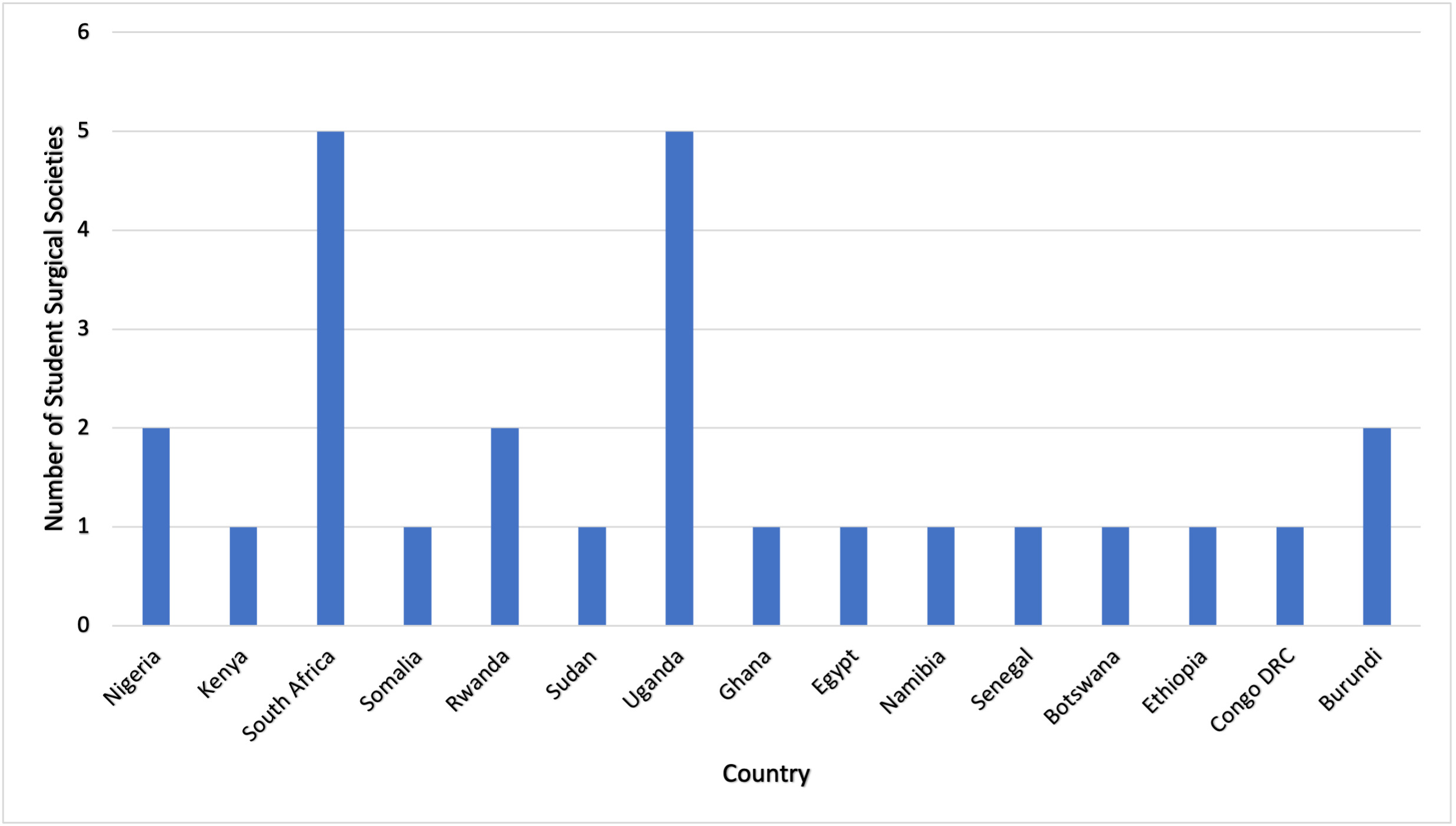
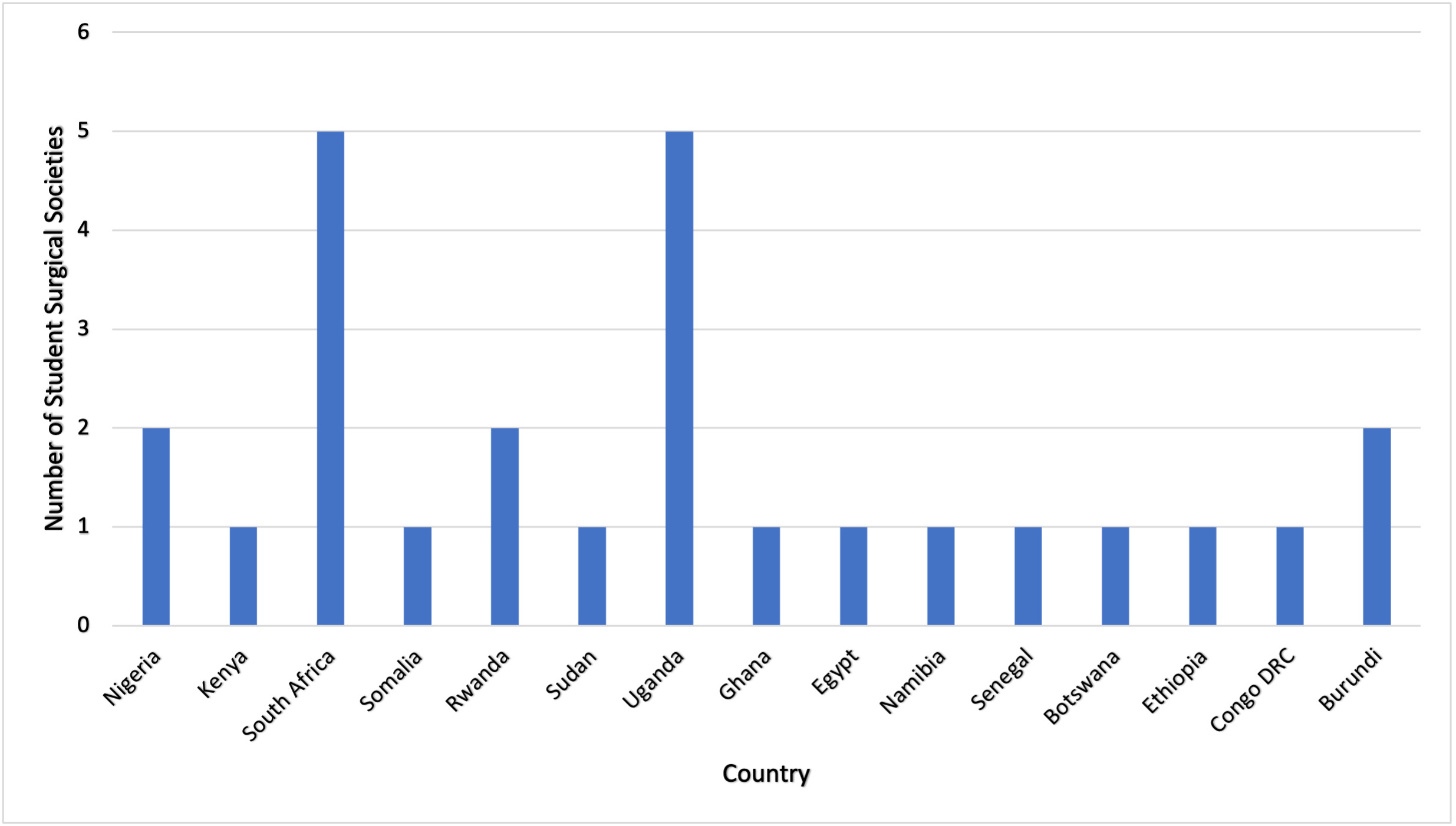
Africa comprises 54 countries and 1274 universities.20 However, only 15 African countries (28%) had at least 1 undergraduate student surgical society: Nigeria (2), Rwanda (2), Sudan (1), South Africa (5), Kenya (1), Uganda (5), Burundi (2), the Democratic Republic of the Congo (1), Egypt (1), Somalia (1), Namibia (1), Botswana (1), Ethiopia (1), Ghana (1), and Senegal (1) (Table 1 and Figure 1).
Participant demographics
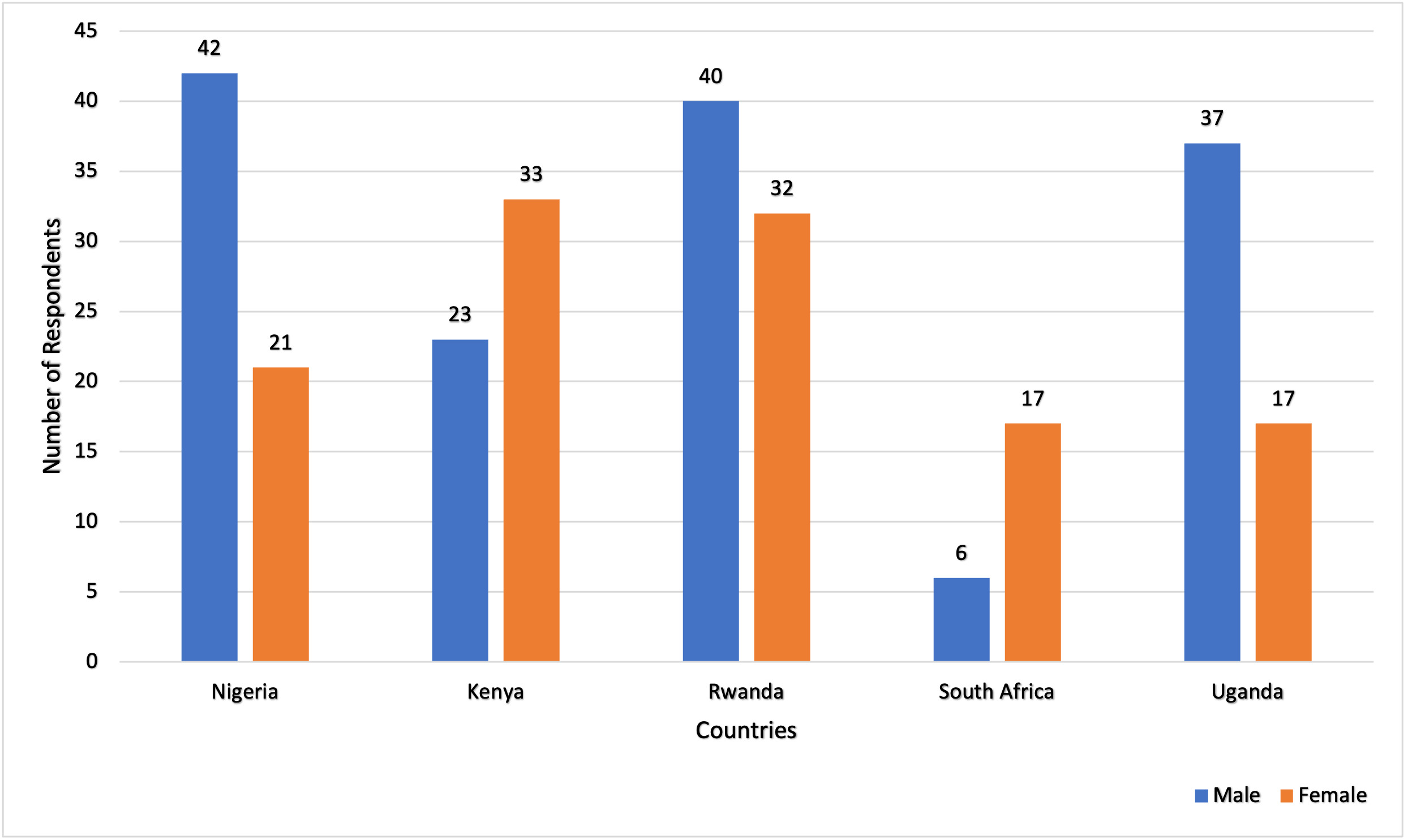
A total of 268 respondents from 5 African countries participated in the study. The sample had a slight male predominance, with 55.2% male and 44.8% female respondents (Figure 2). The Intare Surgery Interest Group was an outlier, with a female majority, owing to the prioritization of female admissions at the University of Global Health Equity in Rwanda.
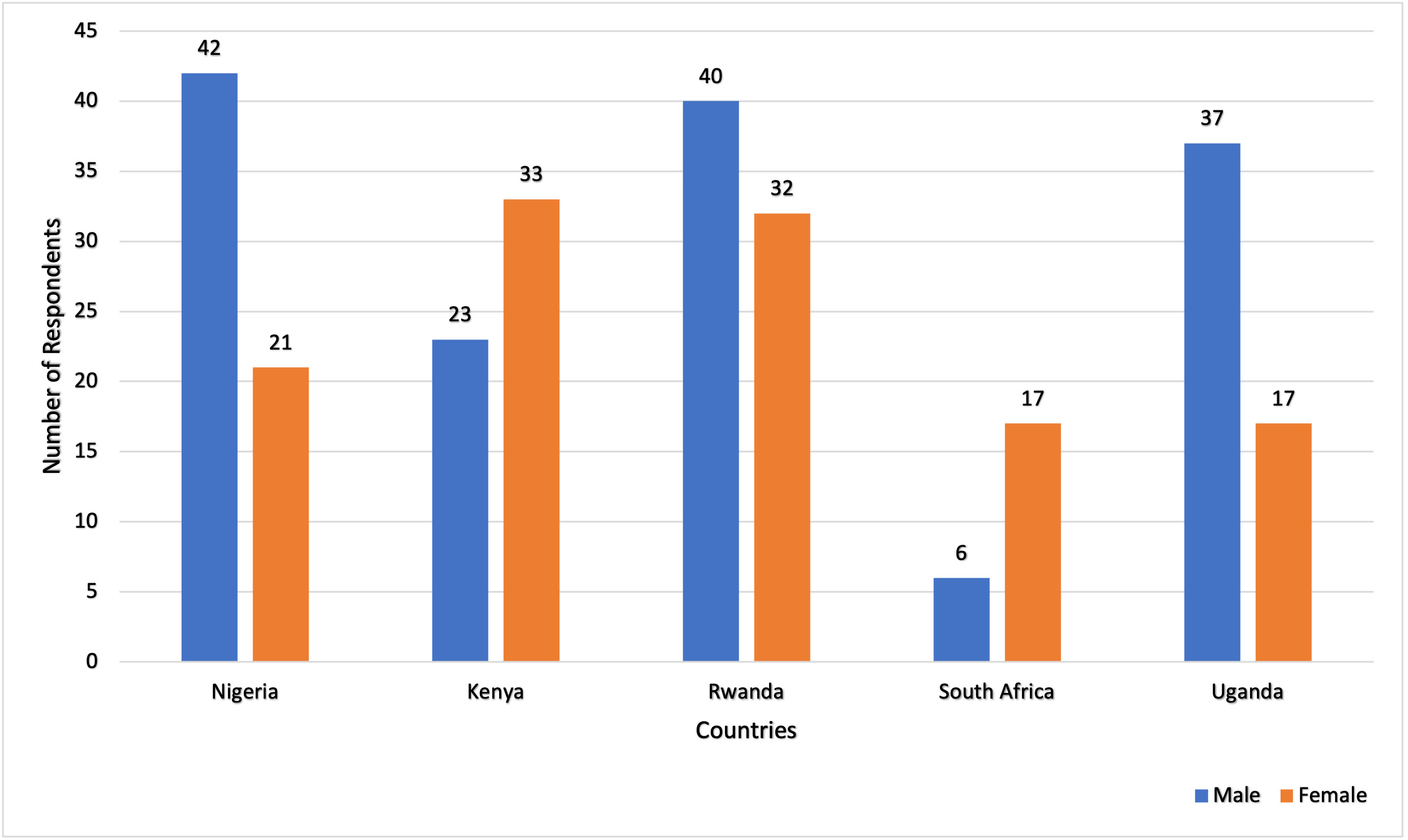
Most respondents were from Rwanda, followed by Nigeria, Kenya, Uganda, and South Africa (Figure 2). Most participants were in the clinical phase of medical training (63.4%), while 36.6% were in their preclinical years. The duration of membership in surgical societies varied: 43.3% reported 1–2 years of involvement, 33.2% reported less than 1 year, 17.5% reported 3–4 years, and 6.0% reported more than 4 years. The mean age of respondents was 22.82 years (range, 16–34 years).
Motivations for joining student surgical societies
The leading motivation for joining a surgical society was an interest in surgery as a career (20.7%), followed by a desire to develop surgical skills (16.7%) and explore networking opportunities (14.3%).
Obstacles faced by women
Female participants reported several key obstacles in their surgical society experiences. The most frequently reported obstacles were a lack of role models and mentors (26.4%), family or societal expectations (25.1%), limited opportunities for networking or leadership roles (18.1%), and gender bias and stereotypes (16.0%).
Support needed to promote gender equity
Participants identified several types of support needed to improve gender equity. The most frequently cited was the provision of mentorship programs (31.9%), followed by equal representation in leadership (30.5%) and awareness campaigns addressing gender issues (22.4%).
Challenges faced by members
Across all participants, the most frequently reported challenges to active involvement in surgical societies were limited time to participate in activities (24.3%), limited access to resources (18.9%), restricted participation in events such as workshops and surgical exposure opportunities (15.5%), and a lack of mentorship (14.0%).
Perceptions of gender equality
On a scale of 1 to 10, participants rated gender equality in their societies at a moderate mean score of 7.94 ± 1.90. Male respondents reported a mean score of 7.84 ± 1.93, while female respondents reported a slightly higher mean score of 8.03 ± 1.87. However, this difference was not statistically significant (P = .421; mean difference = −0.19; 95% CI, −0.65 to 0.27), and the effect size was negligible (Cohen d = −0.10).
Gender-specific experiences
Sex was significantly associated with country of study (P = .001) and university or medical school (P < .001), suggesting variation in gender representation across institutions and countries.
Female participants were significantly less confident in expressing themselves within the societies (P = .021), were more likely to believe that gender affected leadership opportunities (P = .042), were more likely to feel that their gender was underserved in their societies (P = .043), and were more likely to report feeling discouraged from pursuing surgery (P < .001).
Discussion
Africa has fewer student surgical societies than other regions, such as the United Kingdom21 and Australasia.22 Only the following societies expressed interest in collaborating on this study: TUKS University Student Surgical Society; Intare Surgery Interest Group, Butaro, Rwanda; Students’ Surgical Forum, Kenya; the Students’ Surgical Society, Zaria, Nigeria; Makerere University Surgery Society, Kampala, Uganda; and the University of Rwanda Students’ Surgical Society, Kigali, Rwanda.
Although the Gezira Student Surgical Society in Wad Madani, Sudan, expressed interest in the collaboration, its members cited the ongoing insurgency in Sudan as a deterrent to participation.
Contextualizing gender disparities in student surgical societies
This study highlights the persistence of gender disparities within student surgical societies across multiple African countries. Although nearly half of the respondents were female (44.8%), women continued to face distinct challenges, including limited access to mentorship, restricted leadership opportunities, and discouraging societal expectations. These barriers reflect broader trends in surgical education and practice globally, where women continue to comprise a smaller proportion of surgical trainees and senior leaders.23–25 This is also true for gender representation in surgical societies throughout the world.9,26
The predominance of obstacles such as a lack of role models and mentorship (26.4%) underscores the structural nature of these disparities. Surgical societies are designed to foster early exposure, skills development, and professional networks.1 However, if women perceive that these platforms reproduce rather than dismantle gender disparities, the societies risk perpetuating the very inequities they intend to address. Global surgery literature consistently emphasizes mentorship and visible role models as pivotal factors in sustaining women’s interest in surgical careers.27,28
Interestingly, on a Likert scale of 1 to 10, male respondents (7.84 ± 1.93) reported a lower mean perceived gender equality score than female respondents (8.03 ± 1.87). Several factors may explain this finding. Challenges such as limited surgical exposure and a lack of mentorship may have been perceived by male students as barriers to equitable opportunities within their societies. In contrast, female respondents may have interpreted current levels of inclusivity as evidence of significant progress and therefore rated equality more positively. It is also possible that targeted equity initiatives affect how members of different gender groups evaluate overall fairness. Although these specialized pathways are essential to bridging the gender gap, they may draw attention to structural resource allocation and lead to varied interpretations of institutional balance among the broader membership.
The statistical associations observed, including female respondents’ significantly lower confidence in expressing themselves (P = .021) and greater discouragement from pursuing surgery (P < .001), highlight how structural and cultural barriers translate into personal and professional self-efficacy.
Family and societal expectations, cited as obstacles by 25.1% of respondents, reflect cultural norms that prioritize traditional domestic roles over professional aspirations. Although these dynamics are global,29,30 they intersect uniquely with resource constraints and sparse formal mentorship in Africa. The result is a compounding layer of difficulty for aspiring female surgeons.
Motivations and barriers
The motivations expressed by respondents for joining student surgical societies reflect a strong early orientation toward surgical careers. The leading motivations—an interest in surgery as a career (20.7%), skills development (16.7%), and networking opportunities (14.3%)—are consistent with previous studies underscoring the role of extracurricular surgical societies in supplementing formal medical curricula.31
However, the identified barriers highlight persistent structural and cultural challenges that may undermine these motivations. Time constraints (24.3%) and limited access to resources (18.9%) emerged as key obstacles, indicating competing academic demands and institutional deficiencies in supporting extracurricular surgical engagement. Women reported specific gender-related barriers, including a lack of role models and mentors (26.4%), family or societal expectations (25.1%), limited leadership opportunities (18.1%), and gender bias (16.0%). These results align with global evidence that gender inequity in surgical training begins early in medical school and is reinforced by systemic patterns of exclusion.30,32
Although interest in surgery was high, discouragement stemming from gendered expectations and a lack of institutional support may drive attrition before women enter postgraduate training. This concern is reinforced by the significant association between sex and reported discouragement from pursuing surgery (P < .001).
Perceptions of gender equality and leadership
Before this study, the leadership structures of African student surgical societies had not been examined. Traditional patriarchal frameworks in many African contexts have historically favored men for leadership positions while sidelining women.26,33 For example, 66.7% of male surgeons and 50% of female surgeons in Rwanda believed that women were less able to perform surgery.34
Overall, the distribution of leadership roles within the student surgical societies is skewed, with more male students (62.9%) occupying leadership roles than their female counterparts (37.1%) (Table 2). However, the Intare Surgery Interest Group, Students’ Surgical Forum, and TUKS University Student Surgical Society had comparatively higher proportions of female students in leadership roles than the Students’ Surgical Society, Zaria, and Makerere University Surgery Society. Notably, Students’ Surgical Forum, Kenya, was established at the University of Nairobi in 2018 by a female medical student.
Limitations
This study has several limitations. First, its cross-sectional design precludes causal inference and the assessment of changes in gender representation over time. Second, the use of self-reported questionnaires may have introduced reporting bias. Convenience and purposive sampling, together with recruitment through social media and email, may also have resulted in selection and volunteer bias, limiting the generalizability of the findings.
Despite these limitations, the study has important strengths. To our knowledge, it is the first multicountry study to examine gender disparities in African student surgical societies. The inclusion of societies from East, West, Central, and Southern Africa enhances the geographic relevance of the findings, while the sample size strengthens the robustness of the results and provides a basis for future research and policy development.
Areas for future research
Future research should include longitudinal studies to determine how participation in student surgical societies influences surgical career choice and leadership attainment. Qualitative studies exploring female students’ experiences could provide deeper insights into mentorship, inclusivity, and barriers to leadership. Institution-level research is also needed to examine how policies, culture, and leadership within student surgical societies influence gender representation and to identify best practices for promoting inclusivity and female leadership.
Conclusions
This study provides one of the first multicountry assessments of gender-related experiences within African student surgical societies. Overall, respondents perceived their student surgical societies as generally supportive of gender equality; however, differences were observed in leadership representation, mentorship experiences, and perceptions of gender-related barriers. These findings highlight opportunities to strengthen structured mentorship, promote transparent and inclusive leadership development, and foster supportive learning environments that encourage the participation and professional growth of all students, regardless of gender.
Acknowledgments
We extend our sincere appreciation to Jolly Akor Thomas (Mission Brain, University of Ibadan, Ibadan, Oyo, Nigeria) and Gaurav Arora (Cumming School of Medicine, University of Calgary, Calgary, Alberta, Canada) for their invaluable insights and thoughtful contributions to this work.
Ethical Approval
Ethical approval for this study was granted by the Health Research Ethics Committee of Ahmadu Bello University Teaching Hospital, Shika, Zaria, Nigeria (HREC/53199546; November 15, 2024).
Informed Consent
Electronic informed consent was obtained from all participants prior to accessing the questionnaire. Participation was entirely voluntary, and respondents were informed of their right to withdraw at any time before submitting the questionnaire. No identifiable personal data were collected. All responses were anonymized prior to analysis to ensure participant confidentiality. The study adhered to the ethical guidelines of the Declaration of Helsinki.
Data Availability
The datasets generated and analyzed during the study are available from the corresponding author upon reasonable request.
Conflict of Interest
None
Funding
None