Introduction
Academic partnerships are collaborative relationships between two or more organizations, typically educational institutions, to achieve shared objectives.1 They serve as essential instruments that drive institutional development through resource sharing, joint resource mobilization, and the production and dissemination of knowledge products.1 In medical and surgical education, such academic partnerships support appropriate training of the health workforce and contribute to the reduction of existing and emerging disease burdens.2,3 Academic partnerships provide a pathway to achieve access to affordable and quality higher surgical training, education, and care in line with the Sustainable Development Goal 3, which focuses on “Ensuring healthy lives and promoting well-being for all”, and Sustainable Development Goal 4 which aims for inclusive and equitable quality education and promotes lifelong learning opportunities for all.4 Higher education institutions in Africa have formed such partnerships to address critical institutional challenges, including faculty deficits, gaps in governance and leadership, weak research and innovation capabilities, and a limited capacity to diversify funding sources.5,6
August et al integrated partnerships into the definition of global health equity, highlighting the importance of shared ownership, mutual respect, and equitable distribution of resources in such partnerships.7 In line with this ethos, the University of Global Health Equity (UGHE) approaches global health surgical education with a strong partnership-based paradigm.8 UGHE is a new health sciences university and an initiative of Partners in Health focused on raising leaders for Africa’s health care system. The institution places emphasis on equitable access to surgical care and prepares undergraduate and postgraduate students to deliver the same through surgical training programs within the Division of Clinical Medicine, Department of Surgery, and through the Center for Equity in Global Surgery.9 Surgical education in this study is defined as the process of training medical professionals in the skills, knowledge, and techniques necessary to perform surgery and/or establish and manage surgical systems.10
This study aimed to explore UGHE’s approach to academic partnerships for surgical training and the interplay of various partners in UGHE’s mission to increase global health equity. The rationale was to curate a case study and disseminate lessons on how academic partnerships for surgical training can be used to drive meaningful change in global health equity.11,12
Methods
This study is a qualitative narrative, desk review of partnership-related institutional documents and reports. Using an inductive grounded theory perspective, available institutional documents on surgical training partnerships were thematically analyzed. We collected and analyzed information from UGHE’s partnership office until all documents were exhausted, and thematic saturation occurred.
Setting
This study was conducted at the UGHE between May and August 2024. UGHE is in Burera district in the Northern part of Rwanda. Burera District is a rural community with an estimated population of 400,000 people served by Butaro Level 2 District Teaching Hospital, which serves as UGHE’s primary clinical site. This location was specifically chosen to meet UGHE’s mission of equity-centered medical education. This model is a unique approach to health care delivery that takes advanced and specialized care to rural communities by providing advanced surgical care and cancer care.13 UGHE has different programs related to surgical education including surgical clerkship training for undergraduate medical education students, a Master’s in Global Health Delivery program with a global surgery option, and a recently commenced general surgery residency program to train postgraduate medical doctors. UGHE’s undergraduate medical program provides a comprehensive clinical surgical program, equipping medical students with essential skills for general practice. The postgraduate program in global surgery focuses on surgical systems, policy and capacity building, aimed at preparing graduates to address the global disparities in surgical care. The study reviewed all relevant documentation related to development and implementation of all surgical education programs at UGHE.
Through partnerships with other academic institutions, governmental institutions, non-governmental organizations, health care organizations, and the community, UGHE seeks to address critical challenges in global health and promote equity.14,15 The university has also made community engagement a cornerstone of its efforts to advance health care. Situated in remote Rwanda, the institution provides real-time platforms for students, including those from international universities, to engage with rural communities directly to identify challenges and find solutions that are pragmatic and owned by the community.
Sources of Data
Desk review data sources included the UGHE partnerships database, the MoU repository, the UGHE Strategic Plan 2021–2025, the UGHE Centre for Equity in Global Surgery Concept Note and recorded documents, the Global Surgery Postgraduate Education Needs Assessment document, the 2022 Junior Surgical Clerkship Assessment Report (a review of curriculum delivery), and relevant aspects on the UGHE website. The documents were identified based on their relevance to partnerships and surgical education at the university (Table 1).
Inclusion and Exclusion Criteria
The inclusion criteria included signed and verifiable official university documentation traceable to the office of the dean of the School of Medicine, the University Academic Partnerships unit, the Center for Equity in Global Surgery, or the Department of Surgery within the Clinical Division. These documents were included only if they were produced within the last five years and were still active. We excluded expired MoUs and any document older than five years, as preparation for surgical training began only within the last five years. Partners with expired MoU were considered inactive, hence excluded from the study.
Data Collection Procedures
The principal investigators met with the UGHE academic partnership manager to provide a brief overview of the study and request the information needed for the desk review. The partnership manager provided relevant documents for review and provided additional partner information collated in a partnership directory. The information obtained from the partnership directory included data on the year of partnership inception, the presence or absence of a formal MoU, key contact persons from partner institutions, and primary areas of partnership engagement. UGHE’s website and other publicly available sources were also reviewed for relevant information. Each document was reviewed collectively by two members of the study team to collect relevant partnership-related information. Information gaps were filled by reviewing documents identified in consultation with principal academic surgical faculty at UGHE and representatives from partner institutions.
Ethical Considerations
Ethics board approval was obtained from the UGHE Institutional Review Board (Reference number UGHE-IRB/2024/293).
Data Analysis
Inductive thematic analysis was conducted to identify recurring patterns related to the partnership-based model of surgical education at UGHE. Coding was performed manually without qualitative software due to the confidential nature of some documents. Two members of the research team independently reviewed and coded the documents, generating initial inductive codes that were consolidated into a shared codebook through iterative discussion and consensus. Codes were then grouped into broader themes with triangulation of data across multiple sources to ensure validity, and with member checking of final thematic areas with surgical faculty and partners.
Reflexivity and the Role of the Researchers
The documents were interpreted by the principal investigators, who were graduate students at UGHE at the time of the study, with academic oversight from UGHE faculty and faculty from partner institutions. NG is a medical doctor from Ethiopia, while GM is an anesthesia educational programs expert. The institution did not interfere with data collection, analysis, or interpretation. The analysis was conducted by both investigators from an objectivist perspective, treating the documents as formal institutional records that could be systematically examined for observable patterns. To minimize researcher bias, NG and GM led independent coding, consensus discussions, triangulation across sources, and member checking to enhance analytic rigor and credibility.
Results
The results from the documents reviewed were organized into four main inductive thematic areas discussed below, including “Surgical training partnerships as a core educational strategy,” “Partner mapping: local and global footprint of surgical training partners,” “Outputs of partnership-based surgical training,” and “Bidirectional partnerships grounded in equity.”
Surgical training partnerships as a core educational strategy
In its strategic plan for 2021–2025, the UGHE leadership and community outlined four strategic priorities with which to establish itself as a leading institution that champions equity, inclusion, diversity, respect, social justice, and universal health care access. These priorities include academic excellence, research and innovation, maximizing community benefits, and building a sustainable institution. The institution’s overarching strategic goal is to cultivate the next generation of global health leaders by expanding academic programs (including surgery), intensifying research initiatives, and enhancing community engagement and health programs that prioritize community welfare.
The university identified and leveraged both international and local partnerships to achieve the stated objectives. The opportunities for launching successful academic programs were primarily centered around these collaborations. According to the strategic plan document, "establishing partnerships and memorandum of understanding with leading experts, collaborating with global philanthropists, and forming alliances with local hospitals" are recognized as key approaches to reaching UGHE’s ambitious goals. Additionally, UGHE’s community engagement programs are designed around the core principle of improving active partnerships with the community in rural Rwanda to develop contextualized, evidence-based solutions to addressing health care, social, and economic challenges. Furthermore, the university has strategized to deliberately map, profile, and onboard more partners from diverse backgrounds to ensure the sustainability of its objectives.
Within surgical training, the needs assessment was predicated on partnerships and a consensus conference with other medical schools in Rwanda, the Rwanda Medical and Dental Council, rural district facilities, the College of Surgeons of East, Central and Southern Africa (COSECSA), individual surgeons within the African continent, and foreign partners.9 A review of the concept notes for the formation of the Center for Equity in Global Surgery (CEGS) revealed that partnerships with 17 specific organizations were mentioned as a part of its growth strategy. These organizations included non-governmental organizations, professional associations, regional training organizations, universities, teaching hospitals, and equipment manufacturers. These early and foundational connections emphasized the engagement of surgical training partnerships as a core educational strategy.
Partner mapping: local and global footprint of surgical training partners
UGHE’s commitment to training the next generation of health care professionals through partnerships was clearly demonstrated in its Bachelor of Medicine, Bachelor of Surgery junior and senior surgical clerkships and its global surgery programs. Since its establishment, the University of Global Health Equity has effectively utilized collaborations with the Government of Rwanda and several international institutions to deliver high-quality education.14 UGHE has formed partnerships with over seventy institutions, forty of which remain active in academic and research areas. The partners are involved at both the individual and institutional levels and come from the Global North and Global South. We identified 24 institutions engaged in partnered surgical education at both the undergraduate and postgraduate levels, with most partners being universities focused primarily on clinical training at the university’s rural teaching hospitals (Table 2). Most (n = 14; 58%) of these institutions have a formal MoU with UGHE.
Alongside the Rwanda Ministry of Health, the center at UGHE was also involved in initiating the Pan African Surgical Healthcare Forum, a partnership with African ministries of health to design and pursue a roadmap for improving access to safe and affordable surgery on the continent including considerations of surgical education.16
Geographical mapping of surgical training partnerships
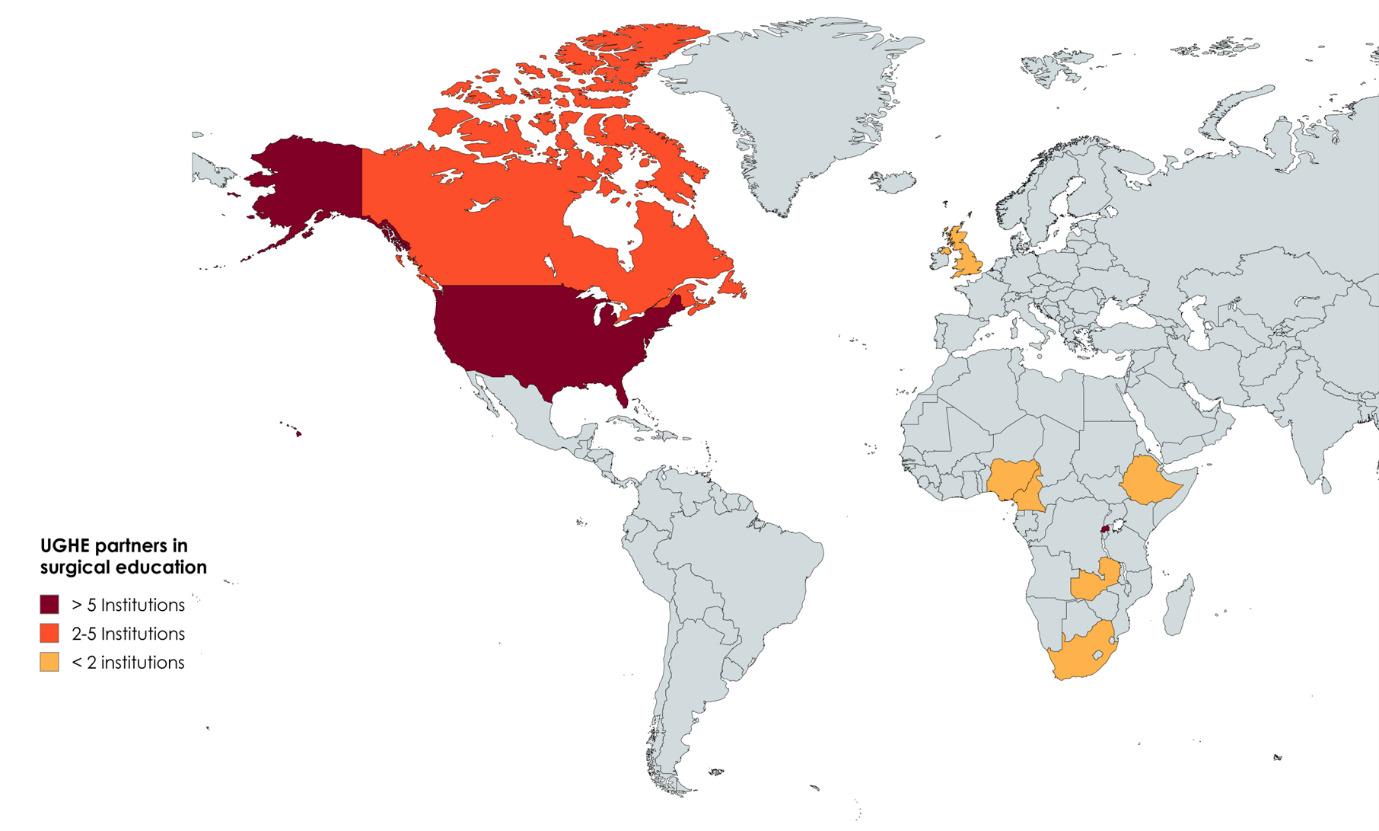
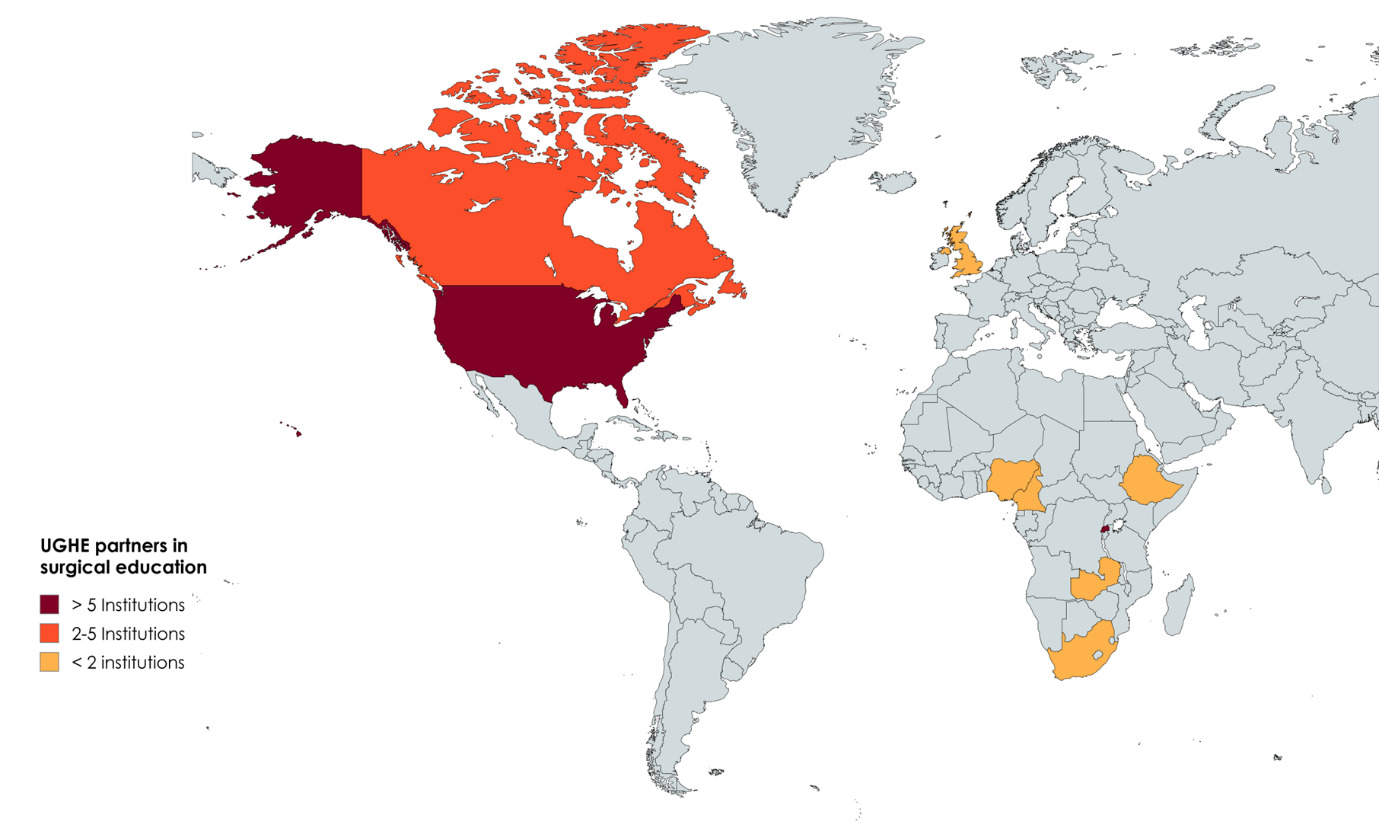
Of the 24 partner institutions, ten are from the Global South, and the remaining fourteen are from high-income countries in the Global North. Eight of the ten Global South surgical partner institutions are local partners located within Rwanda and include hospitals that serve as student clinical attachment sites and participate in activities such as faculty exchange, clinical training, simulation-based education, and joint research projects. The remaining 16 (67%) were foreign partnerships, with most (62.5%) from the United States of America (Figure 1). These institutions partnered with UGHE’s surgical teaching efforts through partnered curricula and surgical training content development, student assessment, faculty capacity building, simulation-based education, integration of surgical technology, research, and program evaluation within the University’s global surgery and clinical programs.
Duration mapping of surgical training partnerships
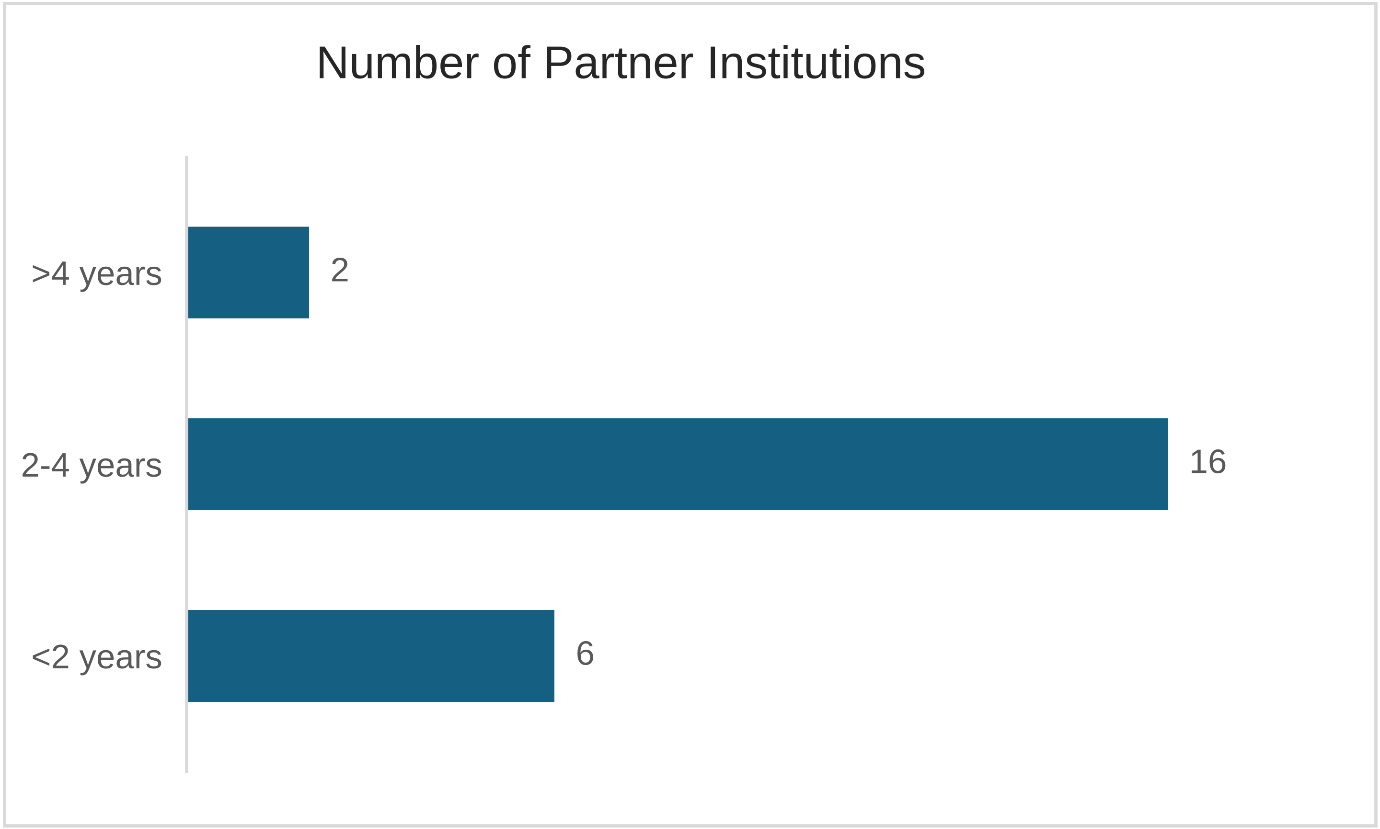
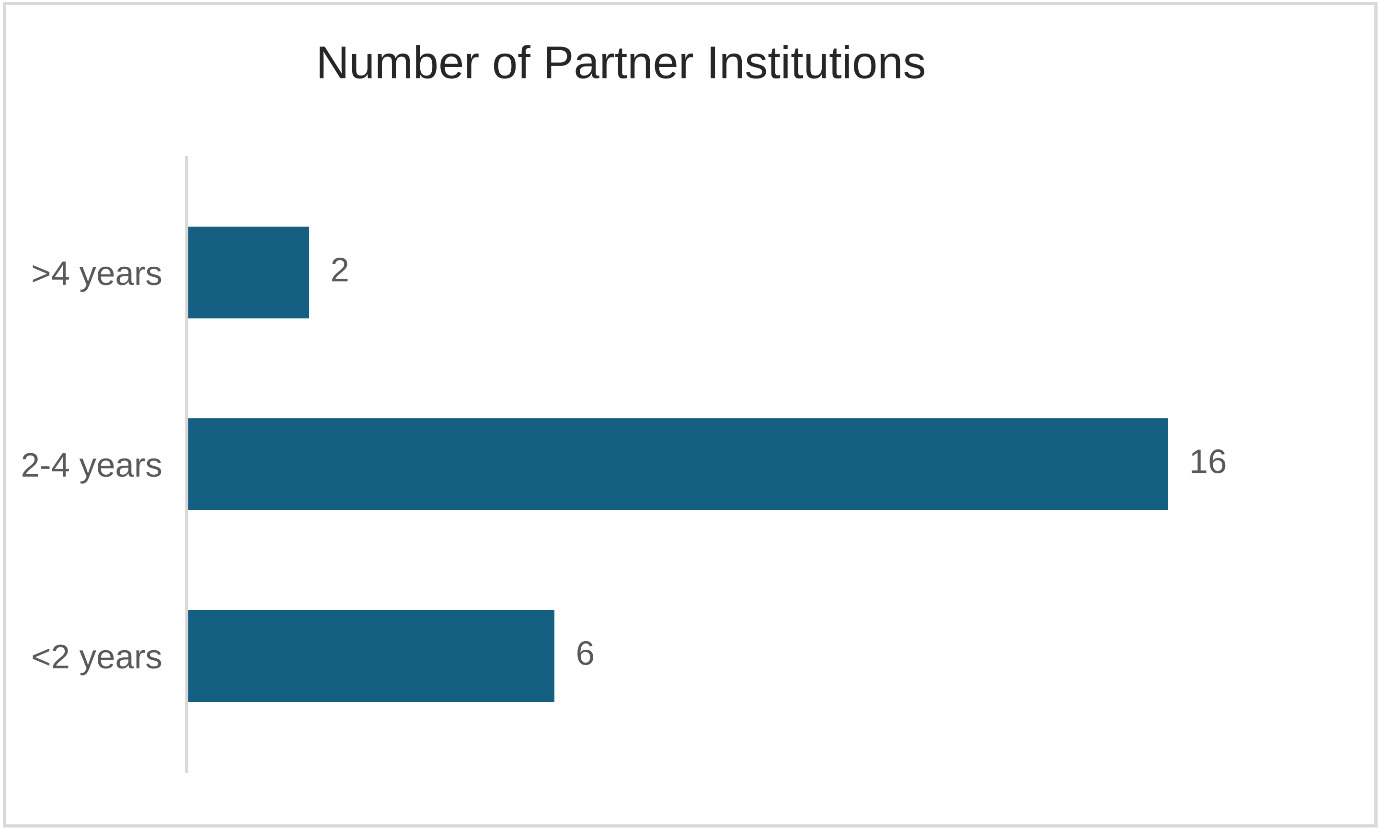
Most partnerships (n = 18; 75%) had continued for more than two years. Partnerships were established at different time points between 2019 and 2024 (Figure 2). Longer-standing partnerships were typically involved from the early stages of curriculum development through to training delivery. Partnerships with shorter duration largely reflect more recent onboarding, particularly following the introduction of the Global Surgery course in 2024.
Outputs of partnership-based surgical training
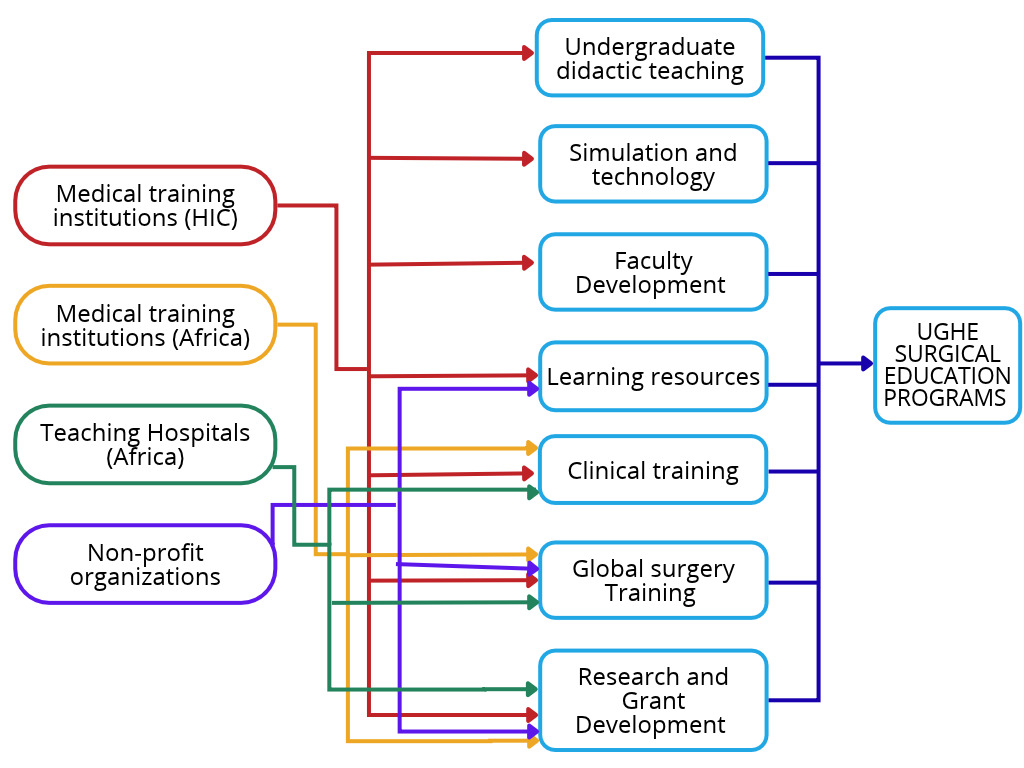
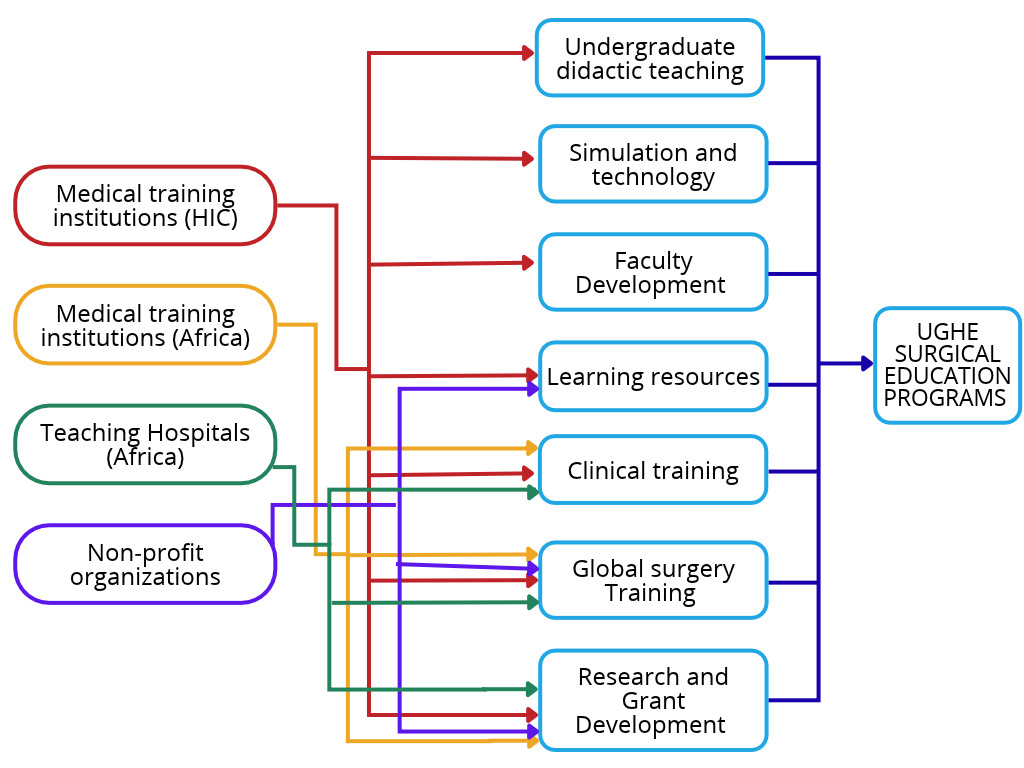
Four categories of partners (medical training institutions in high-income countries, medical training institutions in Africa, African teaching hospitals, and non-profit organizations) contributed to distinct output areas of UGHE’s surgical education programs (Figure 3). These outputs are described below.
Simulation and technology
UGHE was able to deliver quality surgical education for medical students supported by partnership-driven cutting-edge educational technology. Partners involved in simulation and technology are also involved in simulation training programs other than providing the technology.
Undergraduate didactic teaching
Most partners involved in UGHE’s surgical education programs contribute to didactic teaching for both undergraduate and postgraduate master’s students. Document review shows that 11 institutions participate in curriculum design and course preparation, with eight of them actively delivering didactic courses to students at both levels.
Medical school clinical training
The partnership-based surgical education model has helped UGHE provide hands-on clinical learning experiences at three rural district hospital facilities in Rwanda and provided opportunities for bilateral student exchange internationally. Its surgical clerkship programs are supported by simulation teams in university and district hospitals and by adjunct faculty from local and foreign institutions with fellows and faculty coming in to teach for weeks to months at a time. The partnership-based approach for medical school clinical training was predicated and informed by a modified Delphi study that involved surgical experts from all around the world with experience in surgical training in low- and middle-income countries and Rwanda in particular.
Global surgery training
The Master’s in Global Health Delivery, Global Surgery Option facilitated by UGHE’s partnerships is an example of a needs-driven health care education program that has enabled the training of surgical leaders who possess knowledge and skills in global surgery, public health, and surgical system strengthening. Designed by a multi-institutional curriculum committee, this program is founded on partnerships with capacity building for local faculty. Cross-institutional teaching and training in global surgical care with shared seminars, master’s-level courses, and faculty exchanges are examples of outputs of partnerships for global surgery training at UGHE.
Surgical training resources (software, hardware, libraries, learning management systems)
Students have access to reference materials delivered through modern educational platforms such as Canvas (a Learning Management System), ENTRUST (an online surgical gamification platform), Wise MD (a video-based surgical education platform) and MedIQ (an education, assessment, and analytics system) all made available through various partner institutions. Surgical library access is also partner-supported.
Faculty development
The role of partners was also crucial to ensure UGHE faculty benefit from courses and training available at partner institutions. Such arrangements were important to expand knowledge and widen the perspectives of faculty through exposure to international practices. For instance, UGHE facilitates training for CEGS faculty at the University of Oxford in a course on global surgery and leadership.
General surgery residency
The Center for Equity in Global Surgery started a general surgery residency program under UGHE’s master’s in medicine (MMed) postgraduate programs. The general surgery residency program is modeled on existing UGHE programs, such as the undergraduate medical student surgical clerkship courses and the Master’s in Global Health Delivery, Global Surgery Option, to deliver contextualized quality training for residents. The document review reveals that UGHE is leveraging its partnerships with community and district hospitals in the Northern and Eastern Provinces of Rwanda to facilitate work-based learning. This will expose residents to the local burden of disease and provide the right case mix required to be a competent surgeon in Rwanda. Furthermore, the university aims to expose residents to minimally invasive surgical techniques through partnerships. Course development and design is also supported by COSECSA, UGHE’s prominent partner in surgical education.
Surgical research and grant applications
The outputs of the partnership-based model also extend beyond student achievements at UGHE to research in simulation, community-based burden of disease, surgical education, and clinical surgery.
Measured outcomes
Preliminary outcomes were measured through a mixed methods review of surgical training comprising faculty and student interviews and surveys (2022 Surgical Clerkship Assessment Report). This report indicated that “the educational model significantly enhanced both teaching effectiveness and student preparedness and that 67% of the students rated it as ‘excellent’ or ‘very good’.” The report also revealed that “87.5% of the students felt that their in-class teaching was adequate, and partnership-driven simulation was noted to be useful in achieving the course objectives.”
Bidirectional partnerships grounded in equity
Equity is a principle that drives UGHE’s initiatives in medical education and its health care agenda. The strategic plan document prioritizes equity as UGHE’s core value manifesting through: “diversity, inclusion, respect, social justice and universal health care coverage.” The document mentions that “equity in health cannot be achieved without equity in health education.”
UGHE has taken intentional steps to select mutually beneficial partnerships. The university, therefore, carefully maps and evaluates potential partners against its strategic priorities and institutional objectives. Furthermore, MoU and meeting notes indicate that UGHE clearly outlines its expectations and contributions in formal agreements. For example, the Postgraduate Education Needs Assessment document explicitly states that “training partnerships will also be equity-driven and equity-based.” These efforts reflect UGHE’s commitment to advancing equity through purposeful and structured collaboration.
Discussion
Academic partnerships in global health are instrumental in producing well-equipped professionals who can improve health care delivery.17 UGHE’s partnership-based surgical training at both undergraduate and postgraduate levels is aimed at addressing critical gaps in the surgical workforce and service delivery. This document review investigated UGHE’s partnership-based approach to surgical education. The four main thematic areas summarize the university’s intentional approach to partnership-based surgical education, which is characterized by the multitude of partners. The university’s distinctive approach of positioning the surrounding rural community as active partners represents a novel model that facilitates context-specific learning and solution development. Furthermore, outputs of the partnership-based education model, such as simulation and technology, didactic learning courses, curriculum development, and faculty development are explored.
Through its partnership model, UGHE has addressed local challenges in surgical education. A review of UGHE’s 2021–2025 Strategic Plan identified limited expert faculty and funding as key barriers to academic goals. Partnerships mitigated faculty shortages by supplementing local teaching capacity and supporting curriculum delivery. A study by Gemechu et al (2025) conducted at UGHE echoed these constraints, emphasizing the need for partnerships to address capacity and financing gaps. These partnerships have also strengthened leadership training programs through faculty capacity-building initiatives that combine mentorship, skills transfer, and structured training. In addition, sustained engagement with academic and clinical partners has enhanced the university’s research and innovation capacity, facilitating joint scholarly activities, knowledge exchange, and the development of new educational and clinical initiatives.18 These findings are consistent with Alemu et al (2025) and Rickard et al (2019), who highlight partnerships as essential for sustainable academic development.19,20
UGHE formed partnerships for surgical training with diverse organizations and communities representing both North‒South and South‒South collaboration. Such multiple and diverse partnerships have been shown to enhance research collaboration, facilitate the efficient use of resources, and bridge knowledge gaps.21 UGHE’s engagement with different partners from diverse backgrounds has been instrumental in bringing together professionals and experts with varied input to enhance surgical education programs. The result of the document review suggests that partners took part in different areas of education ranging from didactic teaching to simulation training, and in several programs such as undergraduate training, clinical clerkships, general surgery residency, and postgraduate courses. As a case in point, the general surgery residency program is strongly supported by government frameworks, funded by not-for-profit partners, and receives academic expertise from High-Income Country contexts. The partnership-based model has therefore helped UGHE to deliver quality surgical care education and training enriched by a wide range of expertise.
Global academic partnerships must address the power imbalances and capacity inequities of institutions. This should be strengthened from inception, ie, partner selection. Hierarchical and top-down approaches were identified as partnership barriers affecting collaborations at an institutional level.5 UGHE’s capacity-building efforts, as outlined in its strategic plan, emphasize the importance of establishing long-term partnerships that align with its objectives and vision. By actively seeking and mapping these collaborations, UGHE enhances educational experiences while prioritizing sustainable capacity building in health care and avoiding power imbalances. This commitment is further exemplified through faculty development programs, which equip UGHE staff with clinical and leadership competencies via training opportunities at partner institutions abroad.
UGHE also based its partnerships on “give and take” principles, in which the university offers hands-on rural community health programs where students and researchers from all around the world have the chance to experience real health care challenges by immersing themselves in UGHE’s ideally situated rural campus. By providing such opportunities for students, including those from international institutions, UGHE helps students build an understanding of local health challenges and encourages the development of context-specific solutions, which is essential for training health care professionals sensitive to the unique needs of these populations.11 Moreover, it is emphasized that engaging health care providers with local communities is vital for developing culturally sensitive and sustainable solutions.22 UGHE reflects this principle through initiatives that allow students, residents, faculty and their partners to work directly with rural populations, facilitating trust and collaboration to lead to better health outcomes.
In conclusion, UGHE recognizes the importance of partnerships to achieve its vision of global health equity and collaborates with various international and local institutions to address complex health care challenges. With its principles centered around equity and mutually beneficial partnerships, UGHE has emerged as a center of excellence situated within a rural community with a transformative, partnership-based approach to medical education and research. This is exemplified through its surgical training programs that emphasize the use of collaborative efforts to promote global health equity by ensuring mutual benefits and positive outcomes for all stakeholders involved.
Ethical Approval and informed consent
The study received ethical approval from the University of Global Health Equity Institutional Review Board (UGHE-IRB), reference number UGHE-IRB/2024/293. Consent to participate was not applicable for this narrative desk review.
Data Availability
The datasets generated during the current study are available from the corresponding author upon request. The materials and documents used for this desk review are available in the Zenodo repository at https://doi.org/10.5281/zenodo.14630639.
Conflict of Interest
The authors declare that while they are students, staff, faculty and partners of the Center for Equity in Global Surgery within the University of Global Health Equity, they have no competing interests.
Funding
None