Introduction
Endoscopy is an important medical tool that allows clinicians to visualize, diagnose, and treat gastrointestinal (GI) and other internal diseases with minimal invasiveness.1 The tool was first developed by Desormeaux in 1853; Kussmaul and Nitze refined early open-tube designs, eventually giving rise to flexible and video-assisted systems that revolutionized diagnostics and therapy.2,3
Within the College of Surgeons of East, Central, and Southern Africa (COSECSA) region, competence in endoscopic procedures is now expected of general surgeons and physicians managing GI disease.3 In Uganda, the growth of endoscopy can be attributed to the pioneering efforts of local surgeons and physicians who introduced and advanced this vital technology. Collaborations with charitable institutions have also played an important role.4 Despite the evident need for endoscopy services, access remains limited across the COSECSA region.5,6 Existing studies from Mulago and Kampala, Mbarara, Lacor, Mbale, and other hospitals in Uganda, as well as the wider East African region, have described selected aspects of endoscopy capacity, trainee experience, dyspepsia and H. pylori evaluation, and endoscopic findings; however, these studies do not provide a consolidated historical account of how endoscopy practice evolved across Uganda or lessons that this history offers for training and health-system strengthening.3–5,7,8
This narrative charts the development of endoscopy in Uganda, emphasizing key events, influential contributions, and the challenges that have shaped the field’s current state. Additionally, it summarizes key lessons for similar resource-limited environments. This historical narrative draws on published literature, institutional records, and oral-history insights from 5 pioneering Ugandan surgeons and physicians involved in the early development of endoscopy. Participants were purposively selected for their historical roles, with additional clinicians identified through peer recommendation. The aim was to preserve pioneer perspectives and highlight lessons for training and health-system strengthening, rather than to provide a representative sample of endoscopy providers in Uganda.
The Ugandan Journey: Key Milestones
Earliest training experiences
The political turbulence in Uganda from the 1970s to the mid-1980s crippled the health care sector in the country and forced many physicians to seek training abroad. Among the trailblazers was Prof. Magid Kagimu, a GI specialist who was among the first Ugandan doctors to receive endoscopy training. He completed his master’s degree in medicine at the University of Khartoum, Sudan, where he was introduced to endoscopy and an abdominal ultrasound. He joined the Department of Internal Medicine under Prof. Marcel Andrew Otim and later collaborated with Dr. Richard Goodgame, an American Baptist Church-affiliated physician, on an H. pylori research project using upper GI endoscopy biopsies. This work contributed to his growing experience and to the early development of endoscopy practice in Uganda.
In parallel, Prof. Ignatius Kakande began his endoscopy training in 1989 at the University of Nairobi, where he first encountered rigid esophagoscopy. After returning to Uganda, Prof. Ignatius Kakande collaborated with Prof. Magid Kagimu and other colleagues in Makerere University’s Department of Surgery to further develop endoscopy practice. In addition to Sudan and Kenya, Prof. Kakande pointed out that Ugandan professionals were finding training opportunities in Zimbabwe. By 1996, 4 Ugandan surgeons had received training from Zimbabwe, helping to establish endoscopic practices in other hospitals, including Lubaga, Mengo, and Kagando Hospital. During his tenure at Nsambya Hospital in the late 1990s, he trained other Ugandan doctors and nurses, eventually establishing Mulago and Nsambya Hospitals as foundational centers for endoscopy training.
Similarly, between 1996 and 2000, Prof. Moses Galukande, after his training in general surgery, gained additional exposure to video endoscopy at Stoke Mandeville Hospital in Aylesbury, England. Upon his return to Uganda, he collaborated with International Hospital Kampala to establish an endoscopy unit, initially focusing primarily on diagnostic procedures and later expanding to include interventional procedures. This partnership helped establish services outside government hospitals and expanded access to care in the private sector.
At Kagando Hospital in Western Uganda, Dr. Francis Nelson Owori recounted that between 1995 and 1999, the hospital acquired a fiberoptic scope through a donation. Working alongside Dr. Andrew Hodges, a missionary surgeon, Dr. Owori gained hands-on experience with upper and lower GI procedures, advancing his endoscopy skills about 4 years after completing his MMed in general surgery. This access to specialized equipment and mentorship from visiting experts was instrumental in expanding endoscopy services outside of Uganda’s capital, Kampala.
In preparation for the 2006 Commonwealth Heads of Government Meeting, the Ministry of Health prioritized the development of endoscopy services at Mulago Hospital. By 2003, plans were underway to open and renovate the hospital’s endoscopy unit, where Prof. Kagimu, Dr. Noah Mukasa Masiira, and other surgeons were working. Recognizing the need for skilled support staff, the Ministry sponsored nurses’ training in Kenya and Germany to ensure that Mulago’s endoscopy team could offer high-quality, safe procedures. This Ministry of Health support helped strengthen endoscopy services at Mulago Hospital and demonstrated early government involvement in building national endoscopy capacity.
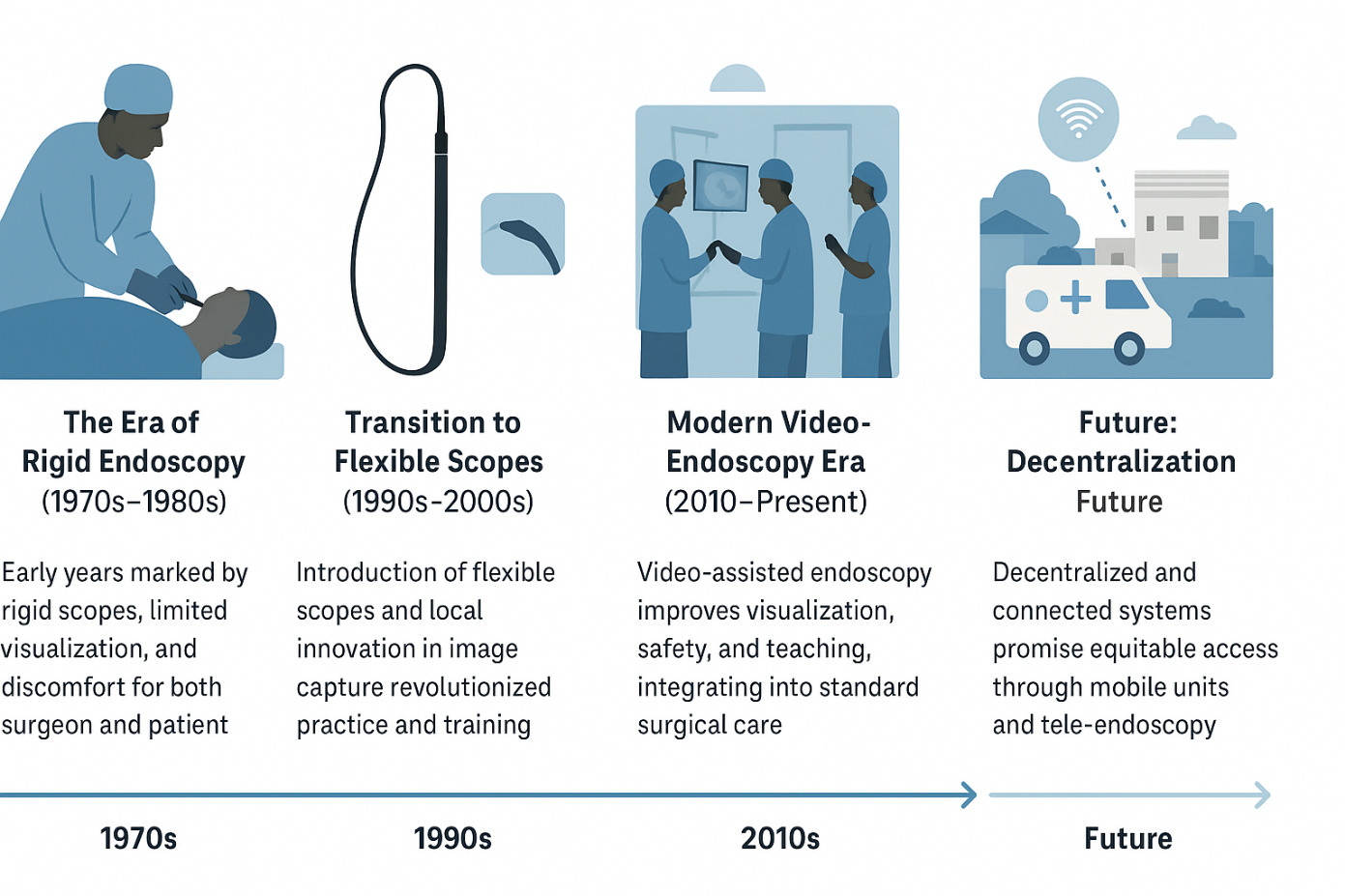
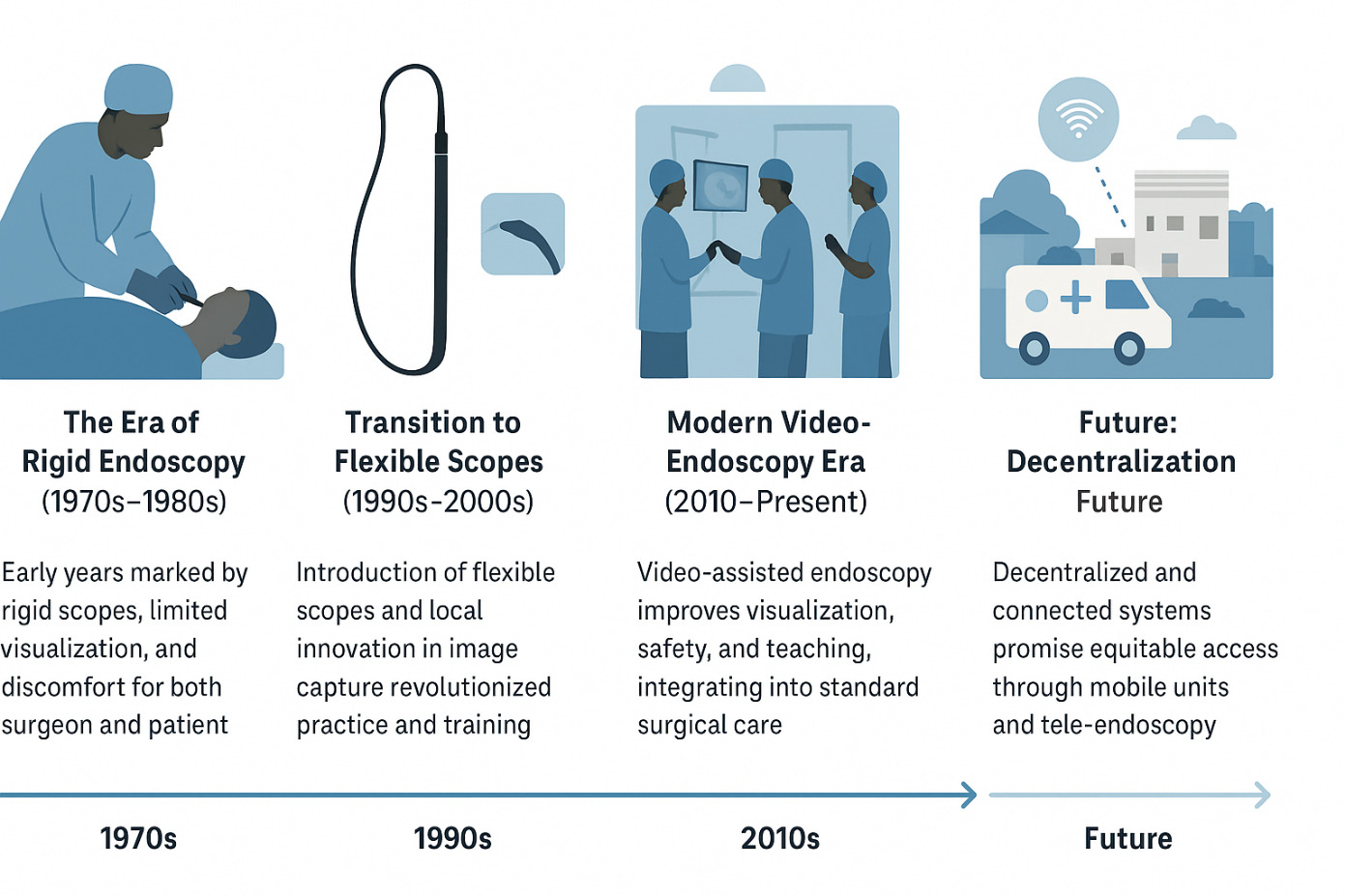
From these foundational institutions (Mulago, Nsambya, International Hospital Kampala, and Kagando Hospital), a network of skilled endoscopists emerged. Surgeons such as Prof. Kagimu, Prof. Kakande, Dr. Masiira, Prof. Galukande, and Dr. Owori, each of whom were trained both locally and abroad, collaborated with other professionals to share their skills. By mentoring additional surgeons and physicians in endoscopy, they extended this expertise across Uganda from the mid-2000s onward, as summarized in Figure 1. Learning the techniques was basically described as follows: seeing, working under someone, and then doing. This collaborative effort laid the groundwork for the ongoing availability and development of endoscopic services in both public and private hospitals.
Initial setup: early instruments, scopes, and endoscopy practice
In Uganda, early exposure to endoscopy often involved rigid endoscopes used by cardiothoracic surgeons to detect esophageal cancers and used by general surgeons for lower GI procedures. Dr. Masiira shared a vivid recollection of his experience with rigid sigmoidoscopy for diagnosing lower GI conditions. “Using the rigid scopes was uncomfortable, not just for patients but for us as surgeons,” he said. “The scope had an eyepiece that required me to position my face close to the patient’s buttocks during proctoscopy and sigmoidoscopy. You could imagine how awkward and unhygienic it felt.”
Fear of the rigid endoscopes among patients was common, and Dr. Masiira noted that he also felt discomfort with the procedure. The pain and discomfort were too unbearable, and patients never wanted repeat scopes from the prior terrible experience. However, improvements came in the mid- to late-1990s with the introduction of flexible endoscopy, which significantly changed both the patient and physician experience.
Before flexible endoscopy became more locally available, some patients who required endoscopy had to be referred to Nairobi, Kenya. Prof. Galukande added that after his training in 1998, he and his colleagues acquired refurbished flexible scopes through partnerships with distributors in Northern Ireland. Similarly, Prof. Kakande recalled that Uganda’s first flexible scope was obtained from St. Raphael Hospital in Italy through a collaborative donation. Dr. Owori also notes that between 2001 and 2002, Case Medical Center and the former Kadic Hospital, a private hospital, acquired fiberoptic scopes.
In these initial setups, only the endoscopist could see the findings, and reports were handwritten based solely on visual observation. Prof. Kakande described the arrival of videoscopes in the late 2000s as a major shift, allowing findings to be viewed on screens, photographed with a separate camera, and incorporated into more accurate reports.
Wider training and skill development (2002-2010)
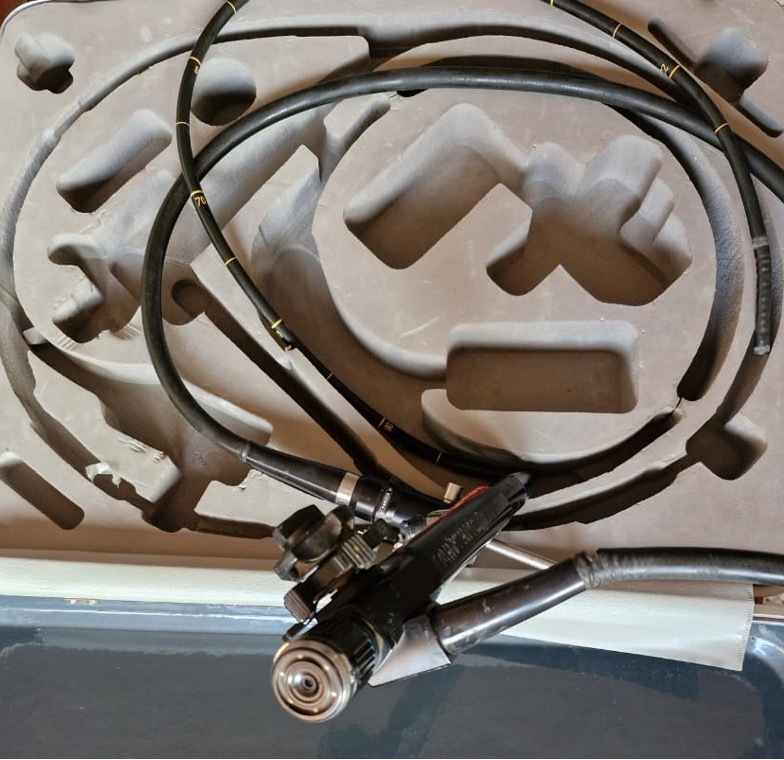
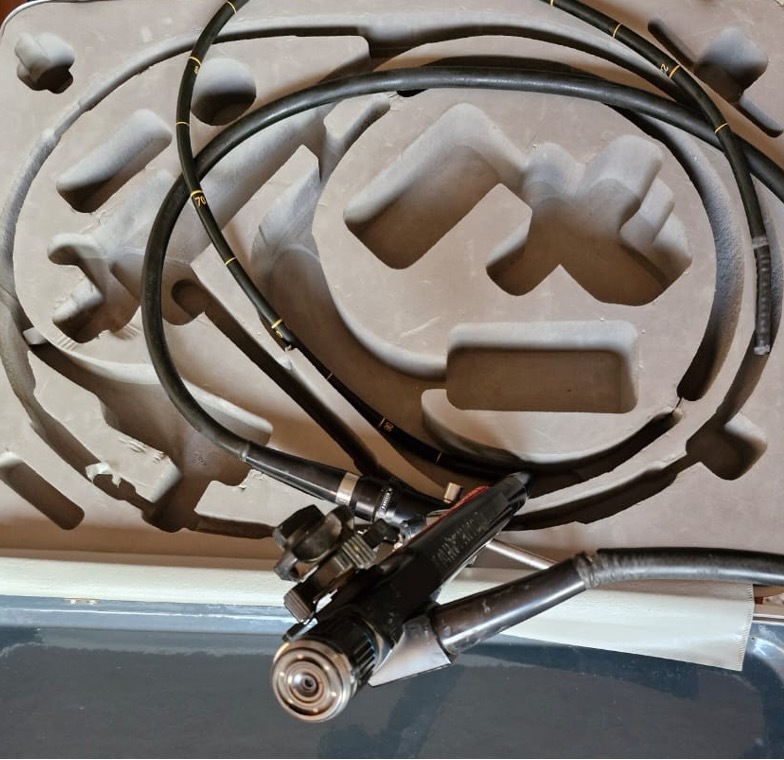
In 2002, Prof Kakande was sponsored to train in Padova, Italy, covering upper and lower endoscopy. After his return, the annual number of performed endoscopies at Nsambya Hospital increased significantly. Notably, Nsambya became an important local center for endoscopy practice and training during the late 1990s and early 2000s. Figure 2 illustrates an early fiberoptic scope used during Uganda’s transition from rigid to flexible endoscopy.
Training and service capacity expanded during this period. Senior surgeons attended Trainer of Trainees sessions in Greece, while other doctors sought mentorship in Nairobi. Biomedical engineering exposure also improved local technical support for scope maintenance. As trainees such as Dr. Francis Basimbe became involved, practice expanded into interventional procedures including sclerotherapy and banding. Although early skills acquisition remained limited due to the scarce instruments and the absence of simulation laboratories, apprenticeships and regional or international exposure gradually broadened the pool of trained surgeons.
Structured endoscopy and upper GI surgical training has also been recognized regionally. COSECSA has established a formal Upper Gastrointestinal Surgery Fellowship, FCS UGS (ECSA), which includes endoscopy-related knowledge and skills. In Uganda, however, most endoscopy training has continued through apprenticeship, short courses, and mentorship. Regional training opportunities in East Africa, including MUHAS/Muhimbili in Tanzania, Kenyatta National Hospital/University of Nairobi, and Tenwek Hospital in Kenya, provide important models for building advanced GI surgery, gastroenterology, and endoscopy capacity within the COSECSA region.
Expanding access and promotion stage (2015-present)
Despite challenges such as high cost of instruments, demand for interventional GI procedures has grown, and more surgeons and physicians have been trained in endoscopy. Currently, some centers perform diagnostic and interventional procedures. These centers are found across the country but remain mostly centered in urban areas.
Most endoscopy training in Uganda remains apprenticeship-based, and there are currently no formal fellowship training programs in endoscopy within the country. During general surgery residency, trainees receive limited exposure to endoscopy, which may include observation and supervised participation in a small number of upper and lower GI endoscopic procedures during their rotations (at least 5 upper and 5 lower GI scopes). This exposure is important for introducing residents to the role of endoscopy in surgical practice, but it should not be interpreted as a marker of independent procedural competence. Competency in endoscopy requires higher case volumes, structured supervision, objective assessment, and opportunities for further apprenticeship, fellowship, or regional advanced training.
In Eastern Uganda, the Kyabirwa Surgical Center emerged as a training hub for health care professionals interested in endoscopy. By leveraging internet connectivity and collaborations with US academic institutions, the center established an endoscopy unit. It facilitated real-time training sessions with overseas doctors. The skills acquired during these mentoring sessions are subsequently shared with other doctors who come to the unit for apprenticeship, thereby contributing to the dissemination of endoscopic expertise within the region.
Although the number of scopes in Uganda has increased, access remains limited, especially in rural areas. Growing demand for evaluation of GI symptoms has emphasized the need for more training, advocacy, and research to enhance endoscopic capacity. Collaborations with manufacturers could establish skills centers for surgeon training. Advocacy for endoscopy training at the undergraduate level is crucial for future advancements.
The Impact on Surgical Practice and Patient Outcomes
Transformation of clinical practice through endoscopy
Before endoscopy, clinicians often managed abdominal pain and GI bleeding with limited diagnostic certainty. Prof. Kagimu noted that endoscopy enabled more specific diagnosis and targeted treatment. Prof. Galukande recalled seeing patients with uncontrolled GI bleeding deteriorate despite nasogastric lavage, Blakemore tamponade, transfusion, and (in severe cases) major surgery. With endoscopy, treatment became more precise and less invasive; he recalled that the first patient he treated with banding survived and was still alive 15 years later. He noted, “An upper GI endoscopy is a brief 20- to 30-minute procedure, yet the impact before and after its introduction has been profound.”
Early procedures also highlighted safety and comfort challenges. Dr. Masiira recalled using lidocaine spray while manually guiding the esophagoscope; he further noted that patients bit his fingers on several occasions. Over time, flexible video endoscopy, bite blocks, improved positioning, sedation, monitoring, and trained nursing support improved patient and provider safety; however, consistent access to these resources remains important for service readiness.
Gaps and Challenges in Uganda’s Endoscopy Services
Procedurally, early endoscopy posed safety and comfort challenges for both patients and practitioners. Experiences such as patients biting the operator’s fingers, discomfort during rigid procedures, and limited safety protocols underscored the need for appropriate equipment, bite blocks, sedation, monitoring, and patient-comfort measures.
A major obstacle was the shortage of trained biomedical technicians to repair and maintain equipment. Much of the early equipment was donated or refurbished, prone to breaking down, and difficult to repair locally. When scopes failed, parts often had to be shipped overseas, causing prolonged downtime and turning some equipment into “museum pieces” rather than functional tools. These limitations increased costs, reduced service availability, and restricted training opportunities.
Training pathways also remained limited. Physicians interested in endoscopy often relied on apprenticeship, short courses, and direct experience with patients. Prof. Galukande, for example, supplemented his training through short courses abroad in advanced skills such as banding, sclerotherapy, submucosal resection, stenting, and endoscopic retrograde cholangiopancreatography (ERCP), but these opportunities were not widely accessible to other physicians. Nurses similarly lacked dedicated endoscopy training and were often taught informally in equipment preparation, patient handling, cleaning, and scope reprocessing.
Documentation and public perception were additional challenges. Early endoscopes relied on eyepieces and handwritten reports, which limited image capture, outcome tracking, and teaching. Myths and skepticism also persisted, partly because some patients with advanced esophageal cancer died after diagnosis. This led to misattribution of poor outcomes to endoscopy rather than delayed presentation and advanced disease.
Despite progress, gaps remain. Training is still limited, simulation laboratories are scarce, equipment maintenance remains difficult, and services are concentrated in urban centers. These challenges continue to affect timely diagnosis, service quality, and equitable access to endoscopy in Uganda.
Proposed Solutions and Future Directions
Establishment of formal training programs
Structured endoscopy training programs are needed to expand the number of trained providers and improve procedural safety. Uganda can improve clinical competencies and procedural safety by creating standardized, accredited programs, as seen in other countries.9 Integrating simulation-based training would ensure that practitioners gain practical skills before performing procedures on patients.10 Collaborations with regional GI and endoscopy training centers could further enhance skills acquisition and professional growth. Existing data on endoscopy experience among surgical trainees and broader COSECSA-region surgical education needs support the importance of structured curricula, supervised training, and regional collaboration for strengthening endoscopy training pathways.3,11 Concurrently, parallel training sessions for endoscopic nurses must be implemented. This is especially crucial as most nurses are not exposed to endoscopy during their initial training, requiring specialized courses and ongoing professional development programs to give them the necessary skills.12
Investment in equipment and biomedical engineering
Sustainable endoscopy service delivery heavily depends on access to advanced equipment and on local capacity to repair and maintain such equipment, which is a major challenge in other African countries. This requires investment in endoscopic tools and dedicated biomedical engineering training programs, which will ultimately reduce reliance on donations and the high costs of overseas repairs. Establishing local repair centers may avoid prolonged interruptions to service and retain equipment functionality.13,14 Furthermore, partnerships between local governments and private hospitals to pool resources for equipment procurement and maintenance could alleviate costs and ensure that more facilities have consistent access to necessary endoscopic equipment.
Addressing perceptions and enhancing public awareness
Public perceptions and myths about endoscopy often deter individuals from seeking these services, even when available. Health education campaigns by medical professionals and community leaders could help demystify endoscopy by explaining its benefits to surgeons and patients and addressing misconceptions.15 Community outreach, media efforts, and patient testimonials can illustrate the life-saving potential of early diagnosis, especially for diseases like esophageal cancer. Increased public awareness and acceptance would likely lead to greater demand, improved diagnostic rates, and timely treatment interventions.16
Expanding access beyond urban areas
Expanding endoscopy services to underserved regions is essential to achieving equity in health care access. Programs like the Kyabirwa Surgical Center in Eastern Uganda illustrate how technology-enabled training can build local expertise and decentralize services. Utilizing telemedicine for remote mentorship and deploying mobile endoscopy units could significantly improve accessibility in rural areas.17 However, telemedicine should be viewed as a complement to, rather than a replacement for hands-on supervised endoscopy training. Its successful use requires reliable connectivity, appropriate equipment, institutional support, patient safety protocols, and clear structured supervision. Sustained financial support from government agencies, nonprofits, and international partners are critical to scaling these initiatives and creating a foundation for widespread, equitable endoscopic care in rural hospitals.
Strengthening advocacy through professional associations
Robust advocacy platforms and professional associations are crucial to advancing endoscopy standards, funding, and professional development. Organizations like the Society of Uganda Gastrointestinal and Endoscopic Surgeons can drive advocacy, foster mentorship, and champion the establishment of standardized practices. Regular meetings, continuing medical education sessions, and collaborations with academic or faith-based organizations showcase the potential for professional networks to expand endoscopy access and improve care quality in both urban and rural settings. A summary of the challenges and proposed solutions is shown in Table 1.
Limitations
This article is a historical narrative and Lessons & Lectures account rather than a study of quantitative outcomes. It draws on oral histories, semi-structured interviews with clinicians involved in the development of endoscopy services in Uganda, institutional recollections, and published literature. We did not collect patient-level procedural data, mortality data, cancer staging data, complication rates, or annual institutional endoscopy volumes. Therefore, the clinical examples presented should be interpreted as historical illustrations of practice evolution and perceived barriers, rather than as measured outcomes or causal associations. References to poor outcomes among patients with advanced esophageal cancer are not intended to suggest that endoscopy caused these deaths. Rather, they illustrate how late presentation, advanced stages of a disease, and poor outcomes after diagnosis may have contributed to community misconceptions. Future work should include institutional audits, endoscopy registries, and studies of procedure volumes, diagnostic yield, complications, cancer stage at diagnosis, patient outcomes, and patient perceptions.
Take-Home Messages
-
Endoscopy services often begin through individual champions, international exposure, and donated equipment; however, long-term sustainability requires institutional systems, including structured training, equipment maintenance, trained support staff, procedure documentation, and quality assurance.
-
Procedural exposure during general surgery training should not be equated with competence. Independent endoscopy practice requires higher case volumes, supervised progression, objective assessment, and opportunities for fellowship, apprenticeship, or regional advanced training.
-
Endoscopy capacity depends on the full-service ecosystem, not simply the endoscopist. Bite blocks, sedation protocols, monitoring, trained nurses, cleaning and disinfection processes, biomedical engineering support, and reliable reporting systems are essential components of safe and effective endoscopy.
-
Donated or refurbished equipment can catalyze early service development, but sustainable expansion requires procurement planning, spare-part access, local biomedical engineering capacity, and partnerships with governments, professional societies, private institutions, manufacturers, and regional training centers.
-
The next phase of endoscopy development in Uganda should move from historical growth to measurable system strengthening. Priorities include institutional audits, procedure registries, complication monitoring, training standards, tele-mentoring linked to hands-on supervision, and planned development of advanced endoscopy services.
Acknowledgments
Special gratitude to the late Prof. Ignatius Kakande, a pioneering figure in Ugandan surgery and a stalwart of the COSECSA. Prof. Kakande’s contributions to this endoscopy narrative, surgical education, and practice have left an indelible mark on the surgical community. His legacy continues to inspire and shape the future of surgery in the region. The authors also extend heartfelt gratitude to all individuals who generously shared their time and insights for this historical perspective.
The authors also acknowledge the invaluable support of the Association of Surgeons of Uganda (ASOU), Society of Uganda Gastrointestinal and Endoscopic Surgeons (SUGES), and Mulago National Referral Hospital for facilitating access to resources and individuals pivotal to this work. We also acknowledge Kibuli Hospital for permission to reproduce Figure 2.
The authors acknowledge the use of Canva (www.canva.com) for creating figures and Grammarly for language editing services. The authors take full responsibility for the final content and have critically reviewed the generated figures.
Data Availability
No datasets were generated or analyzed for this article. The manuscript draws on published literature, institutional records, and professional recollections from clinicians involved in the development of endoscopy services in Uganda.
Ethical Approval and Informed Consent
Formal ethical review was not required because this Lessons & Lectures article is a historical narrative based on published literature, institutional records, and professional recollections from clinicians. It did not involve patient data, patient records, clinical interventions, or identifiable patient information. All interviewees provided consent to participate, to be identified by name, and to have their recollections quoted or paraphrased in the publication.
Funding
None
Conflict of Interest
None